
Turn this metric into a baseline for your team
Preview a system-level engineering health report, then connect GitHub when you are ready to compare this metric with your own delivery history.
Read-only GitHub · Your code stays yours · Team-level by default · No credit card
Presenting engineering metrics to a board of directors is fundamentally different from presenting to your engineering team. Board members don't care about your CI pipeline or which framework you chose - they care about business impact, risk, and whether engineering is delivering on its promises.
"Boards don't fund 'velocity.' They fund certainty. Your job is to translate engineering activity into confidence that the roadmap will be delivered."
This guide shows you how to translate engineering activity into board-ready metrics that executives actually want to see, with practical templates, competitive benchmarking strategies, and frameworks for presenting both good and bad news with credibility.
Why Boards Care About Engineering (Beyond "Velocity")
The Board's Real Agenda
When board members ask about engineering, they're really asking about something else entirely. Understanding their actual concerns unlocks better communication:
| What They Ask | What They Mean | What They Want to Hear |
|---|---|---|
| "How's engineering velocity?" | "Will we hit the roadmap dates we promised investors?" | Predictability + trajectory |
| "Are we efficient?" | "Are we getting good ROI on our biggest expense line?" | Output per dollar trending positively |
| "Is the team healthy?" | "Is there risk of attrition that could derail us?" | Leading indicators, not lagging surprises |
| "How do we compare?" | "Should I be worried about our competitiveness?" | Context for what "good" looks like |
| "What about tech debt?" | "Is there hidden risk that could blow up?" | Quantified risk with mitigation plan |
Our Take
Most engineering leaders fail at board communication because they present what engineers find interesting instead of what boards find actionable. Your deployment frequency chart is fascinating to you - and utterly meaningless to someone evaluating a $5M operating expense. Stop presenting metrics. Start presenting confidence levels and risk assessments.
Engineering as a Capital Allocation Problem
Boards think in terms of capital allocation. Every dollar spent on engineering is a dollar not spent on sales, marketing, or returned to shareholders. Your metrics need to answer the fundamental capital allocation question:
"Is every dollar we spend on engineering creating more than a dollar of value?"
This isn't about proving engineering's worth - that's a defensive posture. It's about helping the board make better decisions about future investment. Should we hire more? Should we acquire capability instead of building? Should we delay the product launch or increase headcount?
The 5 Metrics Every Board Should See
After reviewing hundreds of board decks, a clear pattern emerges. Boards consistently engage with five categories of metrics. Everything else is noise. Below the board layer, the operational view - the metrics engineering ops teams actually run on - is covered in our engineering operations guide and rolls up into the board signal here.
1. Delivery Predictability (Not Velocity)
Boards don't care about raw output. They care about whether engineering delivers what was promised, when it was promised.
DELIVERY PREDICTABILITY SCORECARD
═══════════════════════════════════════════════════════════════

This Quarter:
  Roadmap Items Committed:        12
  Roadmap Items Delivered:        10
  Predictability Score:           83%   [GREEN - Above 75%]

Trend (Rolling 4 Quarters):
  Q1: 67%  →  Q2: 71%  →  Q3: 78%  →  Q4: 83%
  Trajectory: +16 pts YoY [IMPROVING]

What Changed:
  - Reduced average project scope by 30%
  - Implemented weekly scope check-ins
  - Buffered estimates by 20% for unknowns

Board Interpretation:
  "Engineering is increasingly predictable. When they commit,
   they deliver. We can trust roadmap dates for investor comms."
2. Engineering Efficiency Ratio
This metric answers: "Are we getting more output as we grow, or are we just getting bigger?"
ENGINEERING EFFICIENCY TREND
═══════════════════════════════════════════════════════════════

                   Q1 2024    Q2 2024    Q3 2024    Q4 2024
─────────────────────────────────────────────────────────────
Engineering FTEs       18         22         25         28
Features Shipped       14         19         24         31
Features/Engineer    0.78       0.86       0.96       1.11
─────────────────────────────────────────────────────────────
QoQ Change              -       +10%       +12%       +16%
Efficiency Status   [BELOW]   [TARGET]   [ABOVE]   [STRONG]

Analysis:
  - Headcount grew 56% (18→28)
  - Output grew 121% (14→31)
  - Efficiency improved 42% (0.78→1.11)

Board Interpretation:
  "New hires are ramping effectively. Each additional engineer
   is contributing more than the average, not less."
For deeper analysis of efficiency metrics, see our Scaling Engineering Efficiency Guide.
3. Investment Allocation Profile
Where is engineering time going? This is the question boards ask when they wonder why features seem slow despite growing headcount.
ENGINEERING INVESTMENT PROFILE
═══════════════════════════════════════════════════════════════

                          This Quarter    Target    Industry Avg
──────────────────────────────────────────────────────────────────
New Features (Innovation)     45%          50%         40%
Enhancements                  25%          25%         25%
KTLO / Maintenance            20%          15%         25%
Tech Debt / Platform          10%          10%         10%
──────────────────────────────────────────────────────────────────
TOTAL                        100%         100%        100%

Visual Breakdown:

New Features:    ████████████████████████████████████████████░░░░░░  45%
Enhancements:    █████████████████████████░░░░░░░░░░░░░░░░░░░░░░░░  25%
Maintenance:     ████████████████████░░░░░░░░░░░░░░░░░░░░░░░░░░░░░  20%
Tech Debt:       ██████████░░░░░░░░░░░░░░░░░░░░░░░░░░░░░░░░░░░░░░░  10%

Board Interpretation:
  "70% of engineering is building value (features + enhancements).
   20% is keeping the lights on. 10% is paying down past choices.
   This is within healthy bounds for a growth-stage company."
Learn how to categorize and track investment allocation in our KTLO vs Innovation Guide.
4. Risk Dashboard
Boards are risk management bodies. They want to know what could go wrong before it does.
ENGINEERING RISK DASHBOARD
═══════════════════════════════════════════════════════════════

PEOPLE RISK                                         Status: YELLOW
├── Key Person Dependencies:     3 critical systems with bus factor=1
├── Attrition (trailing 12mo):   8% (industry: 13%)
├── Open Positions:              4 (average days open: 45)
└── Flight Risk Indicators:      2 engineers showing burnout signals

TECHNICAL RISK                                      Status: GREEN
├── P0 Incidents (90 days):      1 (down from 3)
├── Mean Time to Recovery:       42 minutes (target: <60)
├── Change Failure Rate:         3.2% (DORA Elite: <5%)
└── Security Vulnerabilities:    0 critical, 4 high (remediation underway)

DELIVERY RISK                                       Status: GREEN
├── Projects at Risk:            1 of 12 (API migration)
├── Scope Creep Incidents:       2 this quarter
├── Blocked Work Items:          3% of active work
└── External Dependencies:       2 waiting on vendor

STRATEGIC RISK                                      Status: YELLOW
├── Architecture Debt Score:     Medium (payment system)
├── Scalability Constraints:     Database approaching limits Q2
└── Competitive Gap:             Feature parity risk in mobile

Board Interpretation:
  "Primary concerns are key person risk and upcoming DB scaling.
   Both have mitigation plans in place with timelines."
Our Take
Risk dashboards are where you build credibility. Anyone can present good news. The leaders who earn board trust are the ones who surface risks early, with mitigation plans already in motion. Never let the board discover a problem before you tell them about it.
5. Competitive Position
Where do we stand relative to peers? This context makes all other metrics meaningful.
COMPETITIVE ENGINEERING BENCHMARKS
═══════════════════════════════════════════════════════════════

                            Us      Peer Avg    Top Quartile
──────────────────────────────────────────────────────────────
Deployment Frequency      Daily    Weekly      Multiple/day
Lead Time for Changes     1.8 days 4.2 days    <1 day
Change Failure Rate       3.2%     8.5%        <5%
MTTR                      42 min   2.5 hours   <1 hour
──────────────────────────────────────────────────────────────
DORA Classification:      HIGH     MEDIUM      ELITE

Engineering Cost/Engineer $185K    $175K       $195K
Revenue/Engineer          $420K    $380K       $520K
R&D as % of Revenue       18%      22%         15%
──────────────────────────────────────────────────────────────

Position Summary:
  "We outperform peers on delivery metrics (DORA High vs Medium)
   while maintaining competitive cost structure. Gap to elite
   is primarily in deployment frequency - roadmap item Q2."
For detailed benchmark data, see our PR Cycle Time Benchmarks guide.
Translating Engineering Metrics to Business Impact
The Business Impact Translation Framework
Every metric you present should complete this sentence: "This metric matters because it affects [business outcome] by [mechanism], which impacts [dollars/customers/risk]."
METRIC TRANSLATION EXAMPLES
═══════════════════════════════════════════════════════════════

TECHNICAL METRIC         → BUSINESS TRANSLATION
──────────────────────────────────────────────────────────────

Cycle Time: 5 days → 2 days
  "We can respond to customer requests and competitive threats
   2.5x faster. This quarter, that meant launching the enterprise
   feature 3 weeks ahead of schedule, closing $450K in pipeline."

MTTR: 2 hours → 45 minutes
  "When issues occur, customers are impacted for half the time.
   Based on our SLA penalties, this reduced risk exposure by
   $50K/year and improved customer satisfaction from 4.1 to 4.4."

Change Failure Rate: 8% → 3%
  "We reduced the percentage of deployments causing issues by
   62%. Engineering spends ~40 fewer hours/month on rollbacks
   and hotfixes - equivalent to hiring half an engineer."

Deployment Frequency: Weekly → Daily
  "We can ship fixes and features same-day instead of waiting
   for a release window. Customer-reported bugs now get resolved
   5x faster, reducing support ticket volume by 15%."
The Dollar Impact Calculator
For maximum board impact, translate time savings to dollars:
ENGINEERING TIME VALUE CALCULATOR
═══════════════════════════════════════════════════════════════

Inputs:
  Average fully-loaded engineer cost:     $180,000/year
  Working hours per year:                 2,000
  Effective hourly rate:                  $90/hour

Cycle Time Improvement (5 days → 2 days):
  PRs per engineer per week:              3
  Hours saved per PR:                     24 hours (3 days × 8 hrs)
  Hours saved per engineer/week:          72 hours
  Weekly savings (25 engineers):          1,800 hours
  Annual dollar value:                    1,800 × 52 × $90 = $8.4M

Reality Check:
  Not all saved time converts to output. Apply 30% factor.
  Conservative annual impact:             $2.5M

Board Presentation:
  "Cycle time improvements this year freed up the equivalent
   of $2.5M in engineering capacity - time we reinvested in
   shipping 4 additional features."
Investment Allocation Visualization
Making Allocation Tangible
Abstract percentages don't resonate. Visualize investment allocation in terms boards understand:
HEADCOUNT ALLOCATION VIEW
═══════════════════════════════════════════════════════════════

Total Engineering: 28 FTEs

NEW PRODUCT DEVELOPMENT          KEEP THE LIGHTS ON
┌─────────────────────────┐      ┌─────────────────────┐
│  👤👤👤👤👤              │      │  👤👤👤👤           │
│  👤👤👤👤👤              │      │                      │
│  👤👤👤                  │      │  4 engineers         │
│                          │      │  (14%)               │
│  13 engineers            │      │                      │
│  (46%)                   │      │  Bug fixes, ops,     │
│                          │      │  security patches    │
│  New features,           │      └─────────────────────┘
│  product expansion       │
└─────────────────────────┘      PLATFORM / TECH DEBT
                                 ┌─────────────────────┐
PRODUCT IMPROVEMENTS             │  👤👤👤              │
┌─────────────────────────┐      │                      │
│  👤👤👤👤👤👤👤          │      │  3 engineers         │
│                          │      │  (11%)               │
│  7 engineers             │      │                      │
│  (25%)                   │      │  Scalability,        │
│                          │      │  architecture        │
│  Enhancements,           │      └─────────────────────┘
│  performance, UX         │
└─────────────────────────┘

MANAGEMENT / PROCESS
┌─────────────────────────┐
│  👤                      │  1 engineer (4%) - hiring, planning, process
└─────────────────────────┘

Question This Answers:
  "If we hire 5 more engineers, where should they go?"
  "If we need to cut 3, what gets impacted?"
Investment Trend Over Time
Show how allocation has shifted and why:
INVESTMENT ALLOCATION TREND (12 MONTHS)
═══════════════════════════════════════════════════════════════

            Q1      Q2      Q3      Q4      Target
────────────────────────────────────────────────────────
Innovation  35%     40%     43%     46%     50%    ▲
Enhancement 20%     22%     24%     25%     25%    ✓
KTLO        35%     28%     23%     20%     15%    ▼ (improving)
Tech Debt   10%     10%     10%      9%     10%    ✓
────────────────────────────────────────────────────────

What Changed:
  Q1→Q2: Stabilized payment system, freed 3 engineers from KTLO
  Q2→Q3: Automated deployment pipeline, reduced ops burden
  Q3→Q4: Cleared critical tech debt backlog, shifted to features

Remaining Gap to Target:
  - KTLO still 5pts above target (20% vs 15%)
  - Root cause: Legacy reporting system requires 2 FTE
  - Plan: Rewrite in Q1 next year, projected to free 1.5 FTE
Engineering Efficiency Trends vs Headcount
The Scaling Efficiency Challenge
As engineering teams grow, efficiency typically drops before recovering. Boards need to understand this pattern and where you are in the curve:
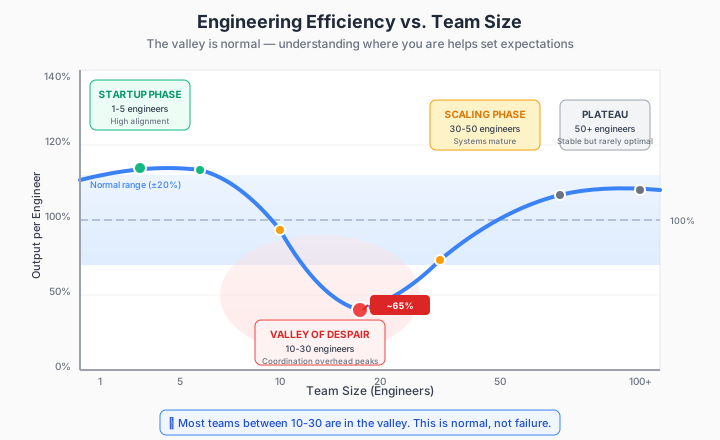
EFFICIENCY SCALING CURVE
═══════════════════════════════════════════════════════════════

Output per Engineer vs Team Size

    │
1.2 │                                              ★ Target
    │                                           ╱
1.0 │  ★ Small Team                           ╱
    │    Sweet Spot    ╲                    ╱
0.8 │                    ╲                ╱
    │                      ╲    ★ We   ╱
0.6 │                        ╲  Are  ╱
    │                          ╲   ╱
0.4 │                            ★ Valley of
    │                              Coordination
    │
    └────────────────────────────────────────────────────
      5     10     15     20     25     30     35    FTEs

Phases:
  1. Small Team (5-12): High efficiency, low coordination overhead
  2. Growing Pains (12-25): Adding process, onboarding, specialization
  3. Valley (20-30): Maximum coordination cost, before systems kick in
  4. Scaled Efficiency (30+): Investment in tooling pays off

Our Position:
  Currently at 28 FTEs with 0.89 output/engineer
  Predicted valley bottom was 0.82 at 25 FTEs
  Ahead of model due to early investment in:
    - Automated testing (saved ~15% review time)
    - Platform team (reduced KTLO by 8pts)
    - Engineering analytics (identified bottlenecks early)
Our Take
Every board has seen a team grow from 10 to 30 engineers while output barely changes. They're expecting it from you too. Get ahead of this concern by showing you understand the scaling curve, where you are on it, and what you're doing to climb out of the valley faster than typical.
Competitive Benchmarking for Boards
Where to Get Benchmark Data
Boards will ask how you compare. Be ready with credible, sourced benchmarks:
| Source | Best For | Limitations |
|---|---|---|
| DORA State of DevOps | Deployment metrics (frequency, lead time, MTTR, CFR) | Self-reported, skews toward orgs that care about metrics |
| LinearB/Haystack Reports | PR cycle time, review patterns | Limited to their customer base |
| Glassdoor/Levels.fyi | Compensation benchmarks | Self-reported, geographic variance |
| Industry Associations | R&D spend as % of revenue | Varies by stage and industry |
| Peer Network | Real data from similar companies | Requires relationships, confidentiality concerns |
Presenting Benchmark Comparisons
BENCHMARK COMPARISON FRAMEWORK
═══════════════════════════════════════════════════════════════

                    Us      Industry   Stage Peers   Target
──────────────────────────────────────────────────────────────
DELIVERY METRICS
  Cycle Time        1.8d    3.5d       2.2d          1.5d
  Deploy Frequency  Daily   Weekly     2x/week       Multiple/day
  Change Failure    3.2%    8%         5%            <3%

EFFICIENCY METRICS
  Features/Quarter  31      22         28            35
  Features/Engineer 1.11    0.85       0.93          1.25
  R&D % of Revenue  18%     22%        19%           16%

TEAM HEALTH
  Attrition         8%      13%        11%           <10%
  Time to Fill      45d     62d        55d           <30d
  Engagement Score  4.2     3.8        4.0           4.5

INTERPRETATION GUIDE:
  ✓ Green  = Outperforming peers and industry
  ~ Yellow = At or near peer average
  ✗ Red    = Below peers, action plan needed
Risk Metrics Boards Actually Understand
Translating Technical Risk to Business Risk
Technical risks need business language to land with boards:
RISK TRANSLATION TABLE
═══════════════════════════════════════════════════════════════

TECHNICAL RISK               → BOARD LANGUAGE
──────────────────────────────────────────────────────────────

"Bus factor of 1 on billing"
  → "One resignation could delay all billing features by 3 months"
  → Dollar impact: $800K revenue at risk (billing roadmap)
  → Mitigation: Cross-training program, 8 weeks to completion

"Legacy monolith tech debt"
  → "Every new feature takes 2x longer than it should"
  → Dollar impact: ~$400K/year in lost engineering efficiency
  → Mitigation: Extraction project, 6-month timeline, $250K investment

"No disaster recovery testing"
  → "We've never verified we can recover from a major outage"
  → Dollar impact: Unknown downtime cost ($50K/hour × ??? hours)
  → Mitigation: DR drill scheduled Q1, budget: $30K

"Single cloud region"
  → "If AWS us-east-1 goes down, we're down"
  → Dollar impact: Last AWS outage was 4 hours = $200K
  → Mitigation: Multi-region roadmap item Q2, $150K infrastructure

"No SOC 2 certification"
  → "Enterprise customers won't buy without it"
  → Dollar impact: $2M pipeline requires SOC 2
  → Mitigation: Audit in progress, certification expected Q1
The Risk Heat Map
Present all engineering risks on a single visual:
ENGINEERING RISK HEAT MAP
═══════════════════════════════════════════════════════════════

                    IMPACT
          Low        Medium       High
        ┌──────────┬──────────┬──────────┐
        │          │          │  KEY     │
  High  │ ○ Test   │ ◐ Scale  │ PERSON   │ ← Probability
        │   Coverage│  Limits  │  RISK    │
        ├──────────┼──────────┼──────────┤
        │          │ ◐ Mobile │ ◐ Tech   │
 Medium │          │   Parity │   Debt   │
        │          │          │          │
        ├──────────┼──────────┼──────────┤
        │ ○ Doc    │ ○ DR     │          │
  Low   │  Gaps    │  Testing │          │
        │          │          │          │
        └──────────┴──────────┴──────────┘

Legend:
  ● Active mitigation underway
  ◐ Mitigation planned
  ○ Accepted risk / monitoring

Priority Actions This Quarter:
  1. Key Person Risk: Cross-training on billing (2 more engineers)
  2. Scale Limits: Database migration to handle 3x load
3. Tech Debt: Payment system extraction (reduces future KTLO)The Quarterly Board Deck Template
The 7-Slide Engineering Update
Board time is precious. Here's a template that covers everything in 7 slides:
QUARTERLY ENGINEERING UPDATE - TEMPLATE
═══════════════════════════════════════════════════════════════

SLIDE 1: EXECUTIVE SUMMARY (30 seconds)
────────────────────────────────────────────────────────────────
┌─────────────────────────────────────────────────────────────┐
│  ENGINEERING HEALTH: B+ (UP FROM B)                         │
│                                                             │
│  ✓ Delivered 10 of 12 roadmap items (83%)                  │
│  ✓ Efficiency improved 16% QoQ                              │
│  ⚠ Key person risk in billing (mitigation underway)         │
│                                                             │
│  NET: On track for annual plan with one area of focus       │
└─────────────────────────────────────────────────────────────┘

SLIDE 2: DELIVERY PERFORMANCE (1 minute)
────────────────────────────────────────────────────────────────
• Predictability: 83% (target: 80%) ✓
• Features Shipped: 31 (vs 24 last quarter) ✓
• Cycle Time: 1.8 days (vs 2.4 days) ✓
• [Trend chart showing 4 quarters]

Key Win: Enterprise SSO shipped 3 weeks early → $450K deal closed

SLIDE 3: EFFICIENCY & INVESTMENT (1 minute)
────────────────────────────────────────────────────────────────
• Features per Engineer: 1.11 (up from 0.96) ✓
• Investment Mix:
  - New Features: 46% (target 50%)
  - Enhancements: 25%
  - KTLO: 20% (target 15%) ← gap here
  - Tech Debt: 9%
• Headcount: 28 (3 hires in quarter, 0 attrition)

SLIDE 4: QUALITY & RELIABILITY (1 minute)
────────────────────────────────────────────────────────────────
• P0 Incidents: 1 (down from 3)
• MTTR: 42 minutes (target <60) ✓
• Change Failure Rate: 3.2% ✓
• Uptime: 99.97%

Incident Post-Mortem: Payment timeout on Oct 15
  → Root cause: Database connection pool exhaustion
  → Resolution: Pool configuration fix + monitoring
  → Customer impact: 47 transactions delayed 23 minutes

SLIDE 5: TEAM HEALTH (1 minute)
────────────────────────────────────────────────────────────────
• Attrition: 0 this quarter (8% trailing 12mo)
• Engagement: 4.2/5 (up from 4.0)
• Open Positions: 4 (senior engineer, 2 mid, 1 manager)
• Avg Time to Fill: 45 days

No burnout signals detected. Workload balanced across team.

SLIDE 6: RISKS & MITIGATIONS (1 minute)
────────────────────────────────────────────────────────────────
  Risk                    Impact      Likelihood   Mitigation
  ─────────────────────────────────────────────────────────────
  Key person (billing)    HIGH        MEDIUM       Cross-training (8 wks)
  Database scale limits   HIGH        LOW          Migration Q1
  Mobile feature parity   MEDIUM      MEDIUM       2 FTE allocated
  Tech debt (payments)    MEDIUM      HIGH         Extraction in progress

SLIDE 7: LOOKING AHEAD (1 minute)
────────────────────────────────────────────────────────────────
Q1 Priorities:
  1. Complete payment system extraction (frees 1.5 FTE from KTLO)
  2. Ship mobile parity features
  3. Database migration for scale

Resource Request: None this quarter
Dependencies: Vendor contract for mobile push (legal in progress)
Key Dates:
  - Jan 15: Payment extraction Phase 1
  - Feb 28: Mobile parity release
  - Mar 15: Database migration complete
The Appendix Slides
Prepare these for questions, but don't present unless asked:
APPENDIX SLIDES (HAVE READY, DON'T PRESENT)
═══════════════════════════════════════════════════════════════

A1: DETAILED METRICS BY TEAM
  - Cycle time, throughput, quality by squad
  - Only show if asked "which teams are struggling?"

A2: ROADMAP ITEM DETAILS
  - Full list of 31 features shipped with business context
  - Only show if asked "what exactly did we ship?"

A3: INCIDENT DETAIL
  - Full post-mortem for any incidents
  - Only show if asked "what happened on Oct 15?"

A4: COMPETITIVE BENCHMARK SOURCES
  - Citations for all benchmark data
  - Only show if credibility is questioned

A5: HEADCOUNT PLAN
  - Detailed hiring plan and JDs
  - Only show if asked about growing the team

A6: TECHNICAL ARCHITECTURE
  - System diagram showing where risks live
  - Only show if technical clarification needed
📊Automating Board Reports with CodePulse
CodePulse provides board-ready exports:
- Executive Summary shows health grade and key metrics
- Year in Review generates quarterly/yearly trend reports
- Export to CSV or PDF for inclusion in board decks
- Schedule automated reports to stakeholders
- Ask Claude to draft the update from live data with the Claude MCP connector
How to Present Bad News with Context
The Bad News Framework
"Bad news doesn't age well. The longer you wait to share it, the worse it gets - and the more it damages your credibility when it finally surfaces."
Every engineering leader will eventually present bad news to a board. How you do it determines whether you're seen as a problem-finder or a problem-solver.
THE BAD NEWS PRESENTATION FRAMEWORK
═══════════════════════════════════════════════════════════════

1. LEAD WITH THE HEADLINE (don't bury it)
   "We're going to miss the Q2 launch date by 4-6 weeks."

2. EXPLAIN THE CAUSE (without excuses)
   "The integration with partner API uncovered data quality
    issues that weren't visible until production testing."

3. QUANTIFY THE IMPACT
   "This delays $1.2M in projected Q2 revenue to Q3.
    No customer commitments affected - we hadn't announced dates."

4. PRESENT YOUR RESPONSE (already in motion)
   "We've already: (1) added 2 engineers to the integration,
    (2) escalated with partner engineering, (3) identified
    a fallback approach if partner doesn't resolve by April 1."

5. ASK FOR WHAT YOU NEED (if anything)
   "We may need to extend one contractor by 6 weeks.
    Budget impact: $45K. Requesting approval."

6. COMMIT TO UPDATES
   "I'll provide weekly updates until resolved. First update
    will include revised timeline with confidence intervals."
Example: Presenting a Missed Milestone
EXAMPLE: MOBILE APP DELAY
═══════════════════════════════════════════════════════════════

❌ WRONG WAY:
"Mobile is behind schedule. We've had some challenges with
performance optimization and the team is working hard to
catch up. We're hopeful we can still hit Q2."

Problems: Vague, no specifics, "hopeful" is not a plan

✓ RIGHT WAY:
"Mobile will launch June 15, six weeks later than the April 30
target. Here's what happened and what we're doing about it:

CAUSE:
Performance testing revealed the app consumes 3x expected
battery on Android. This wasn't caught earlier because our
test devices were plugged in. Fixing requires rewriting the
background sync module.

IMPACT:
- Revenue impact: Minimal. We hadn't announced mobile to customers.
- Competitive: Two competitors launched mobile in Q1. Each week
  of delay represents potential churn risk.
- Team: No overtime required. We're reallocating, not crunching.

RESPONSE (already in progress):
- Senior Android engineer reassigned from enhancement work
- Partner (battery optimization firm) engaged, starting Monday
- Bi-weekly checkpoints added with revised timeline

CONFIDENCE:
- 70% confidence in June 15
- 95% confidence in June 30
- Will update in 2 weeks with refined estimate

REQUEST:
None. We have the resources needed."
Our Take
The boards that trust their engineering leaders are the ones who never feel surprised. If you're worried about sharing bad news, you're thinking about it wrong. Boards expect problems. What they don't expect - and won't forgive - is finding out about problems from someone other than you.
Avoiding Vanity Metrics That Backfire
Metrics That Sound Good But Raise Red Flags
Some metrics seem impressive but actually signal problems to experienced board members:
| Metric | Why It Sounds Good | What Boards Actually Think |
|---|---|---|
| "We shipped 200 PRs this month!" | High activity = high productivity | "What did you actually deliver? PRs aren't outcomes." |
| "Zero bugs in production" | Perfect quality | "Either you're not measuring properly or you're not shipping." |
| "100% sprint completion" | Reliable delivery | "Are you sandbagging estimates? Where's the ambition?" |
| "We work weekends when needed" | Dedicated team | "Poor planning. This isn't sustainable. Attrition coming." |
| "Our best engineer does 3x everyone else" | Star performer | "Single point of failure. What happens when they leave?" |
Activity vs. Outcomes
ACTIVITY METRICS (AVOID)          OUTCOME METRICS (USE)
═══════════════════════════════════════════════════════════════

PRs merged: 847                    Features delivered: 31
Commits: 3,245                     Customer problems solved: 12
Lines of code: 94,000             Revenue enabled: $2.4M
Story points: 312                 Roadmap predictability: 83%
Meetings attended: 156             Cycle time: 1.8 days
Hours worked: 11,200              Uptime: 99.97%

The Test: Can a non-engineer understand why this matters?

"We merged 847 PRs" → "So what?"
"We shipped 31 features including enterprise SSO" → "Great, that
closes the Acme deal."
"The moment you start optimizing for metrics the board can see, you'll start optimizing for the wrong things. Measure outcomes. Present outcomes. Let the activity metrics stay internal."
Automating Board-Ready Reports
The Case for Automation
Manually pulling metrics for every board meeting is time-consuming and error-prone. Automation ensures:
- Consistent methodology (no accidental changes in calculation)
- Time savings (hours per quarter)
- Always-current data (no "as of last Tuesday" staleness)
- Audit trail (how metrics were calculated)
What to Automate vs. What Requires Judgment
AUTOMATION MATRIX
═══════════════════════════════════════════════════════════════

FULLY AUTOMATABLE (set up once, runs forever):
────────────────────────────────────────────────────────────────
✓ PR counts, cycle times, throughput trends
✓ Deployment frequency and change failure rate
✓ Incident counts (if tracked in system)
✓ Headcount and tenure data
✓ Trend calculations and comparisons
✓ Alert threshold monitoring

SEMI-AUTOMATABLE (template + data, human finalizes):
────────────────────────────────────────────────────────────────
◐ Feature-to-business-impact mapping
◐ Risk status updates
◐ Competitive positioning
◐ Quarter-over-quarter narrative

REQUIRES HUMAN JUDGMENT (can't automate):
────────────────────────────────────────────────────────────────
✗ Root cause analysis for incidents
✗ Explanation of variances
✗ Forward-looking plans and priorities
✗ Resource requests and justifications
✗ Risk mitigation strategies
The Quarterly Workflow
BOARD REPORT PREPARATION TIMELINE
═══════════════════════════════════════════════════════════════

WEEK -3 (Three weeks before board):
────────────────────────────────────────────────────────────────
☐ Automated report runs, pulls all metrics
☐ System flags anomalies or significant changes
☐ Initial draft generated from template
☐ You receive notification with preliminary data

WEEK -2:
────────────────────────────────────────────────────────────────
☐ Review automated data for accuracy
☐ Investigate any flagged anomalies
☐ Draft narrative sections (wins, misses, context)
☐ Identify any slides needing appendix backup

WEEK -1:
────────────────────────────────────────────────────────────────
☐ Add forward-looking content (next quarter plans)
☐ Get peer review from another leader
☐ Preview with CEO if helpful (some prefer this)
☐ Prepare for likely questions

DAY -2:
────────────────────────────────────────────────────────────────
☐ Final polish and formatting
☐ Rehearse the 7-minute version
☐ Print backup copies if presenting in person

BOARD DAY:
────────────────────────────────────────────────────────────────
☐ Present with confidence (you know this cold)
☐ Reference appendix when detailed questions arise
☐ Capture follow-up items
☐ Send summary email within 24 hours
What Board Members Actually Want to See
The Board's Perspective
Board members and investors view engineering through a business lens. They want to understand:
- Velocity: Is the engineering team shipping? Is output increasing or decreasing?
- Efficiency: Are we getting good return on engineering investment?
- Risk: Are there technical risks that could impact the business?
- Capacity: Can engineering support the company's growth plans?
- Health: Is the engineering org sustainable, or is there burnout/attrition risk?
What NOT to Present
Avoid metrics that require technical context to interpret:
- Lines of code (meaningless without context)
- Story points (internal estimation tool, not output measure)
- Test coverage percentage (means nothing to non-engineers)
- Technical debt scores (too abstract)
- Individual contributor metrics (raises red flags about culture)
The Right Level of Abstraction
Board-ready metrics should be outcome-focused and comparable over time:
Good for boards:
  "We shipped 23 features this quarter, up 15% from Q2"
  "Time to market improved from 4 weeks to 2.5 weeks"
  "Engineering velocity is tracking ahead of headcount growth"

Too technical:
  "We merged 847 PRs with an average cycle time of 1.8 days"
  "Our deployment frequency increased to 3.2 deploys per day"
  "MTTR improved to 45 minutes"
For deeper context on the technical metrics that inform these summaries, see our Engineering Metrics Dashboard Guide.
Presenting DORA Metrics to Executives
The DORA metrics framework provides a standardized way to measure engineering performance, but needs translation for board consumption:
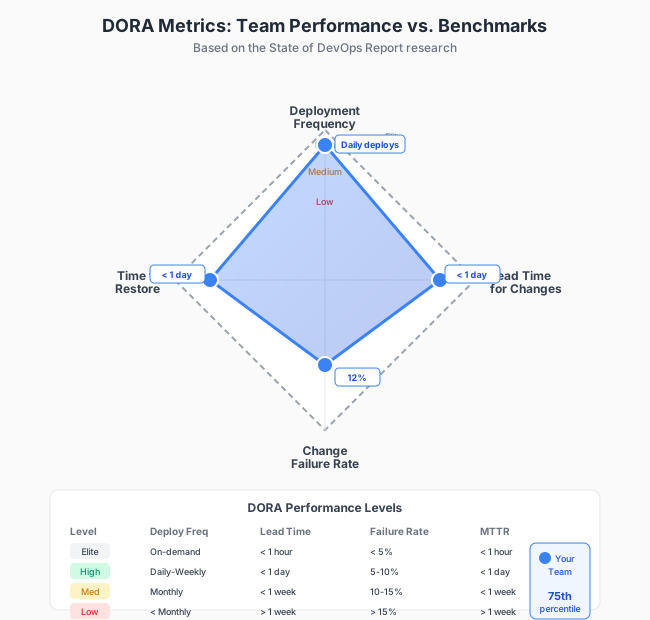
DORA → Board Translation:

Deployment Frequency:
  Technical: "3.2 deploys per day"
  Board: "Engineering can ship changes same-day when needed"

Lead Time for Changes:
  Technical: "1.8 day average cycle time"
  Board: "New features reach customers within 2 days of completion"

Change Failure Rate:
  Technical: "4.2% of deployments cause issues"
  Board: "96% of releases are successful without incident"

MTTR:
  Technical: "45 minute mean time to recovery"
  Board: "When issues occur, we resolve them within an hour"
Continuous Improvement: After the Board Meeting
The Post-Board Retrospective
After each board meeting, reflect:
- Which metrics generated the most discussion?
- What questions were hard to answer?
- What context was missing?
- Did the health grade accurately reflect reality?
- Were any appendix slides needed? Should they be in main deck?
Use this feedback to refine your metrics and presentation for the next quarter. The goal is a board that trusts engineering data and spends meeting time on strategic discussion, not metric clarification.
Related Guides
- Engineering Analytics ROI Guide - Justify investment in engineering metrics
- Weekly Engineering Status Report Template - For more frequent stakeholder communication
- Series B Engineering Metrics Handbook - Investor-specific metrics presentation
- Engineering Metrics Dashboard Guide - The technical metrics that feed board reports
- Quantifying Technical Debt - Building the business case for tech debt investment
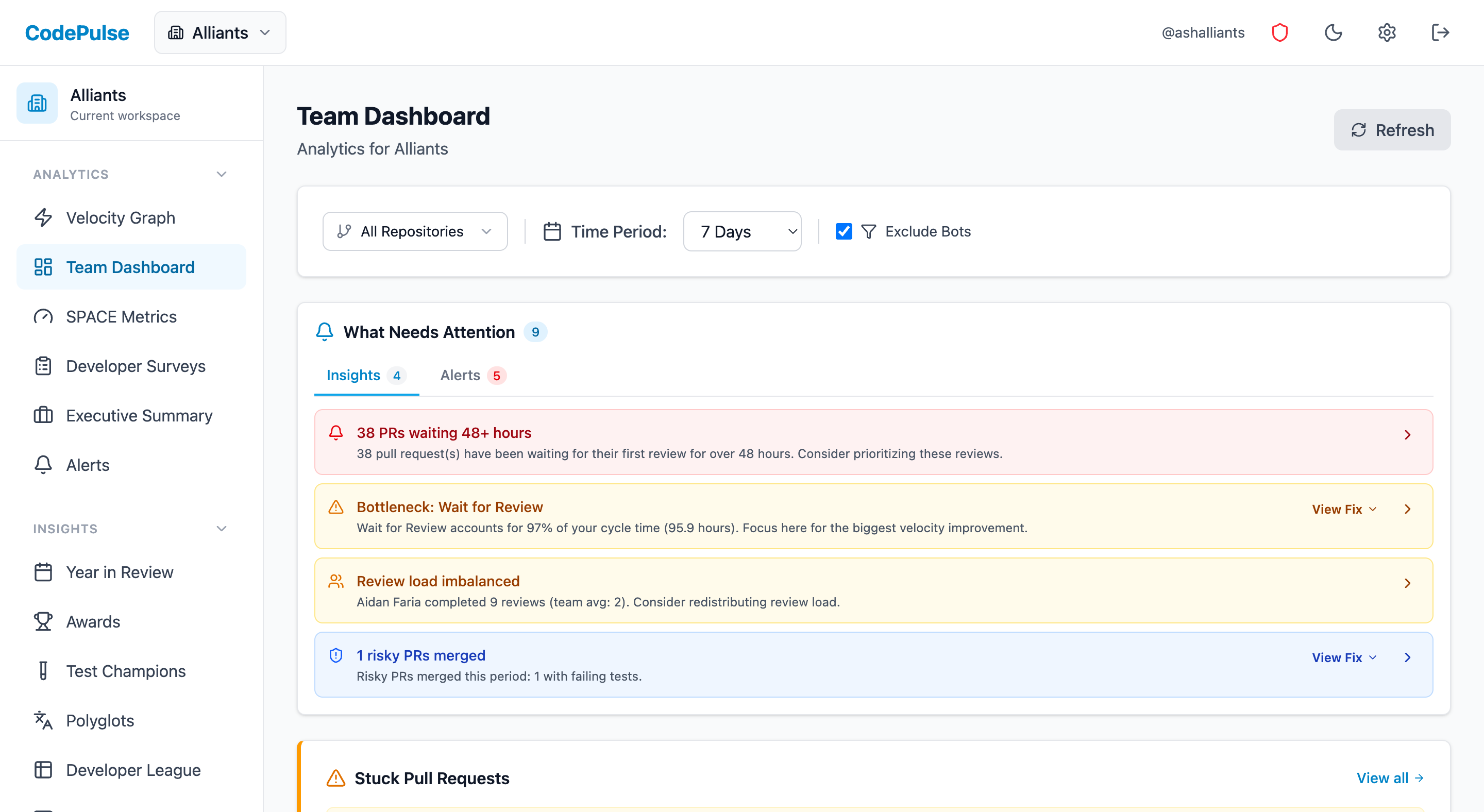
Now measure this metric on your own repositories
Connect read-only GitHub in about five minutes and get your baseline, your trend, and the constraint behind it. Your fourteen usable trial days start when the first repository finishes syncing.
Read-only GitHub · Your code stays yours · Team-level by default · No credit card
See These Features in Action
Compare contribution patterns for coaching, not surveillance.
Board-ready engineering performance in a single page.
Related Guides
Engineering Metrics Dashboard: The 7 Metrics You Need
Skip vanity metrics. Here are the 7 engineering metrics VPs actually need to track team performance, delivery, and quality.
The Status Report Template That Got Me Promoted
Stop writing status reports nobody reads. Here is a template for weekly engineering reports that executives actually find useful.
DORA Metrics Explained: The 4 Keys Without the Hype
A complete breakdown of the four DORA metrics - deployment frequency, lead time, change failure rate, and MTTR - with honest benchmarks and gaming traps to avoid.
No CI/CD Access? Here's How Google Measures DORA Anyway
Measure DORA Four Keys (deployment frequency, lead time, change failure rate, time to restore) using only GitHub data - no CI/CD integration required.
The Data That Made My CFO Say Yes to 5 New Engineers
Build a data-driven business case for engineering headcount using throughput metrics, benchmarks, and trend analysis that executives understand.
No Jira Access? Here's What Your Git Data Already Knows
Track and report engineering progress using pull request data when you don't have access to project management tools.