
Understand the system around the team, not a developer leaderboard
Preview team-level workload, collaboration, and delivery signals designed for process improvement rather than performance grading.
Read-only GitHub · Your code stays yours · Team-level by default · No credit card
How many comments should a code review have? Too few might mean rubber-stamping. Too many might signal unclear code or overly pedantic reviewers. This guide provides benchmarks for healthy review comment volumes and how to interpret what your team's patterns reveal.
Why Review Comment Volume Matters
Review comments are one of the few signals we have into review quality. While they don't tell the whole story, comment patterns can reveal:
- Review depth: Are reviewers actually reading the code, or just clicking approve?
- Code clarity: Does the code require extensive explanation, or is it self-documenting?
- Team knowledge sharing: Are reviews being used as learning opportunities?
- Process health: Is the team engaged in meaningful code review?
The Goldilocks Problem
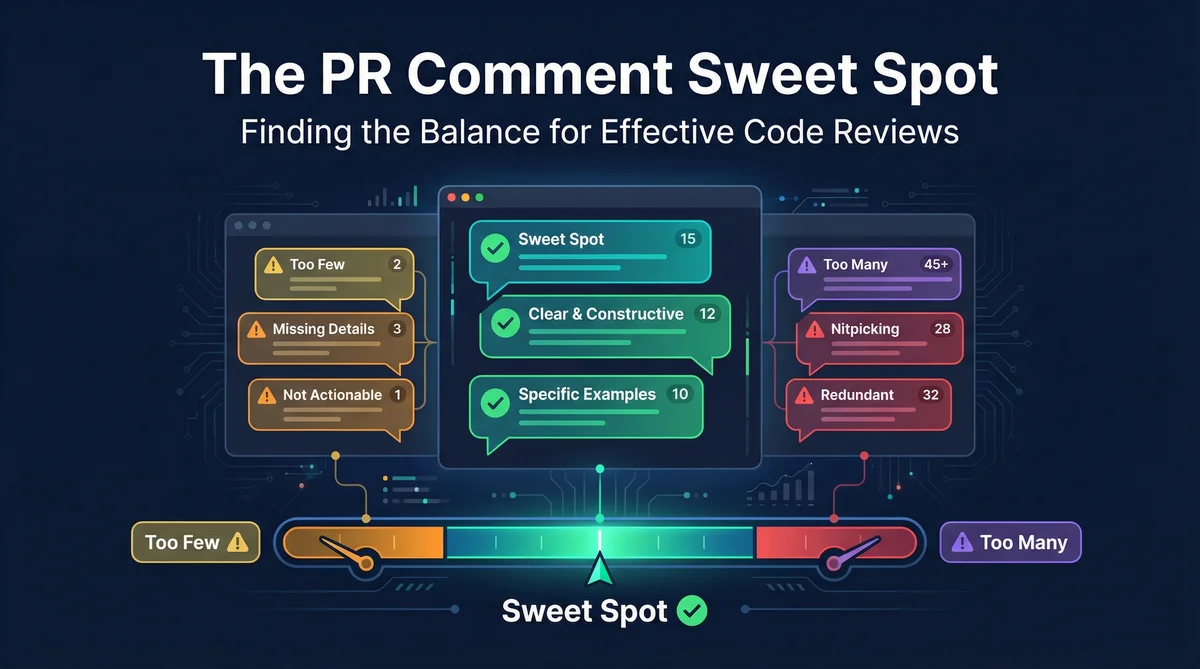
Review comments follow a "Goldilocks" distribution - you want them just right:
| Pattern | What It Might Indicate | Risk |
|---|---|---|
| Very few comments (0-1 per PR) | Rubber-stamping, time pressure, or highly experienced team | Quality issues slip through |
| Moderate comments (2-5 per PR) | Engaged reviewers, reasonable code quality | Generally healthy |
| Many comments (6-15 per PR) | Complex changes, junior developers, or thorough reviewers | May slow velocity if excessive |
| Excessive comments (15+ per PR) | PR too large, unclear requirements, or nitpicky culture | Developer frustration, slower delivery |
Industry Benchmarks by Team Type
Comments Per PR
Based on industry research and analysis of high-performing teams:
| Team Type | Healthy Range | Notes |
|---|---|---|
| Startups (fast-moving) | 1-3 comments/PR | Speed prioritized, smaller PRs |
| Mid-size product teams | 2-5 comments/PR | Balance of speed and quality |
| Enterprise/regulated | 4-8 comments/PR | Compliance may require thoroughness |
| Platform/infrastructure | 3-6 comments/PR | Higher stakes, more scrutiny |
| Open source | 5-10 comments/PR | Contributors need more guidance |
Comments Per Reviewer
Looking at individual reviewer patterns:
- 0 comments consistently: Reviewer may not be engaged - investigate
- 1-2 comments average: Light touch, possibly appropriate for experienced teams
- 3-5 comments average: Healthy engagement level
- 10+ comments average: May be blocking velocity or being overly pedantic
Important Caveats
These benchmarks are starting points, not targets. Context matters enormously:
- PR size: A 500-line PR should have more comments than a 20-line fix
- Author experience: Junior developers benefit from more feedback
- Code area: Critical paths deserve more scrutiny
- Team culture: Some teams prefer verbal discussion over written comments
When Comments Are Too Few
Signs of Rubber-Stamping
- PRs approved within minutes of opening
- Consistently 0 comments across all PRs
- High approval rate with no requests for changes
- Reviewers approve PRs outside their expertise
Why It Happens
- Time pressure: "Just ship it" culture deprioritizes review
- Social dynamics: Reluctance to critique senior developers
- Reviewer overload: Too many reviews, not enough time
- Unclear expectations: Team hasn't defined what good review looks like
How to Address
- Set explicit review expectations (e.g., "Check for X, Y, Z")
- Track review time alongside approval time - instant approvals warrant investigation
- Rotate reviewers to bring fresh perspectives
- Celebrate thoughtful reviews publicly
📊Track Review Depth in CodePulse
Use CodePulse to identify review patterns:
- Review Insights shows comment sentiment and review quality metrics
- Review Network reveals who reviews whom and collaboration patterns
- Track "merge without approval" rate to catch bypassed reviews
When Comments Are Too Many
Signs of Over-Commenting
- PRs stuck in review for days with ongoing back-and-forth
- Developers feeling demoralized by extensive feedback
- Nitpicky comments on style rather than substance
- Same issues raised repeatedly across PRs
Why It Happens
- PRs too large: Big changes invite more comments (see our PR size guide)
- Unclear standards: No linting or formatting automation
- Knowledge gaps: Author unfamiliar with codebase patterns
- Perfectionism: Reviewers holding to impossible standards
How to Address
- Automate style checks: Let linters handle formatting so humans focus on logic
- Break up large PRs: Smaller changes mean fewer comments
- Distinguish blocking vs non-blocking: Use conventions like "nit:" for optional suggestions
- Document patterns: Create team guidelines to reduce repeated feedback
Comment Quality Over Quantity
The number of comments matters less than their quality. A single insightful comment about architecture is worth more than ten nitpicks about variable names.
High-Quality Comments
- Explain the "why" behind suggestions
- Offer alternatives, not just criticisms
- Ask clarifying questions
- Acknowledge good patterns ("Nice use of X here")
- Focus on maintainability and correctness
Low-Quality Comments
- Style nitpicks that linters could catch
- Vague criticism without actionable feedback
- Comments that could be resolved with documentation links
- Demands without explanation
- Consistently negative tone
For more on building a healthy review culture, see our guide on Code Review Culture and Sentiment.
Tracking Review Metrics
Key Metrics to Monitor
| Metric | What It Reveals | Healthy Range |
|---|---|---|
| Comments per PR | Review depth | 2-5 for most teams |
| Time to first comment | Reviewer engagement speed | <4 hours |
| Review rounds | How many iterations before approval | 1-2 rounds typical |
| Comment sentiment | Tone of feedback | Mostly constructive/neutral |
Segmenting the Data
Raw averages can be misleading. Segment your data by:
- PR size: Compare comment counts within size buckets
- Author seniority: Juniors should receive more feedback
- Code area: Critical paths vs routine changes
- Reviewer: Identify outliers (too many or too few comments)
Building a Constructive Review Culture
Setting Expectations
- Define "good enough": Not every PR needs to be perfect. Define what blocking issues look like.
- Time-box reviews: Set SLAs for review turnaround to prevent endless back-and-forth
- Balance load: Use review load balancing to prevent burnout
Encouraging Thoughtful Feedback
- Recognize developers who give helpful reviews (not just volume)
- Share examples of great review comments in team meetings
- Create a review guide with common patterns and how to address them
- Pair junior developers with senior reviewers for mentorship
Using Data Without Micromanaging
Review metrics should inform team discussions, not individual performance reviews. Use them to:
- Identify systemic issues (e.g., "Our PRs are too big")
- Spot opportunities for automation (e.g., "These comments are always about formatting")
- Guide process improvements (e.g., "Reviews take too long in this area")
Avoid using comment counts to judge individual reviewers - this encourages gaming the metric rather than improving quality.
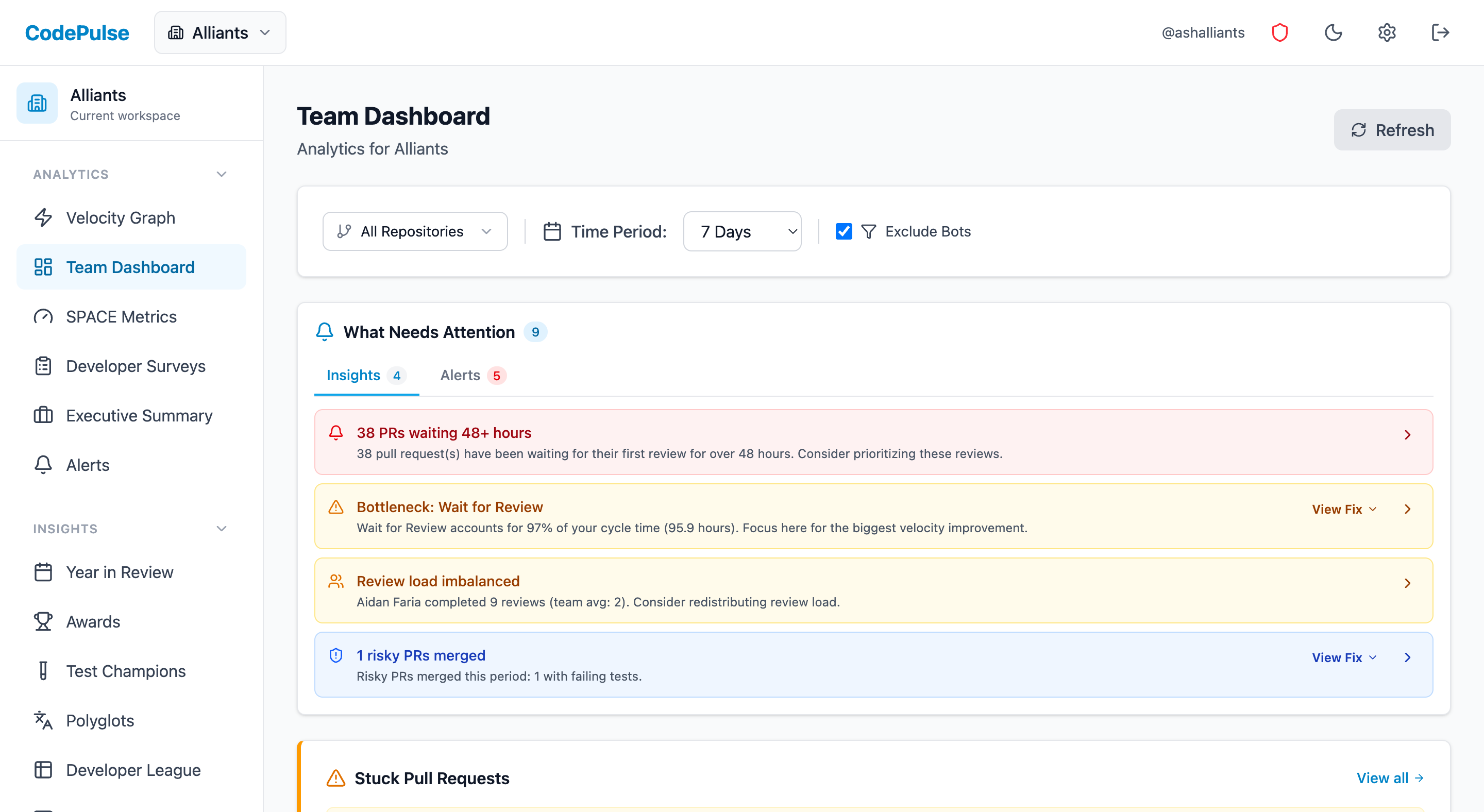
Get this view for your own teams
Connect GitHub for team-level workload, review distribution, and delivery signals. Individual views stay off unless your organisation explicitly turns them on.
Read-only GitHub · Your code stays yours · Team-level by default · No credit card
See These Features in Action
Measure review thoroughness and feedback quality across the team.
Interactive graph of review relationships and workload distribution.
Related Guides
7 Code Review Rules That Actually Get PRs Approved Faster
Learn code review best practices backed by metrics. Covers reviewer guidelines, author guidelines, team practices, and how to measure review effectiveness.
The 300-Line Rule: Why Big PRs Are Sabotaging Your Team
The research-backed case for smaller pull requests, how to measure PR size effectively, and practical strategies for breaking down large changes.
The Exact Number of Reviewers Per PR (Research Says 2, But...)
Research-backed guidance on how many reviewers you need per pull request, with strategies for matching review depth to risk level.
5 Signs Your Code Review Culture Is Toxic (Fix #3 First)
Assess and improve your code review culture. Identify toxic patterns and build psychological safety in your engineering team.
Engineering Metrics That Won't Get You Reported to HR
An opinionated guide to implementing engineering metrics that build trust. Includes the Visibility Bias Framework, practical do/don't guidance, and a 30-day action plan.
Your Git Data Predicts Burnout 6 Weeks in Advance
Use the STRAIN Score framework to detect developer burnout from Git data. Identify after-hours patterns, review overload, and intensity creep before they cause turnover.