

See exactly where your delivery flow is waiting
Preview the phase-by-phase report for review pickup, active review, and merge time. Connect in about five minutes; the initial analysis runs after sync.
Read-only GitHub · Your code stays yours · Team-level by default · No credit card
You hired smart people. You have a clear roadmap. Sprint planning happens on schedule. But features that should take two weeks are taking six. The backlog keeps growing. Stakeholders are frustrated. And when you ask your team why things are slow, you get a different answer from every person. Sound familiar?
The uncomfortable truth is that slow delivery rarely has a single cause. It is the accumulation of seven hidden bottlenecks, each stealing 10-20% of your capacity while remaining invisible to traditional tracking tools. This guide will help you diagnose which bottlenecks are costing you the most and what to do about each one.
"Teams rarely ship slowly because of one massive problem. They ship slowly because of seven small problems, each shaving a day off every feature. That is how two-week work becomes two-month work."
The Shipping Speed Paradox
Here is the paradox that keeps engineering leaders awake at night: your team is working harder than ever. Commits are up. Hours logged are up. Meetings are packed. But delivery speed is down. What gives?
The answer lies in distinguishing between throughput (how much work flows through your system) and cycle time (how long each piece of work takes). Teams can have high throughput of activity while having terrible cycle time for value delivery.
🔥 Our Take
"We need to move faster" is not a strategy. It is a symptom that leadership does not understand where the friction actually is.
Most teams do not have a speed problem. They have a flow problem. Developers can write code in hours, but that code sits in queues for days. The work is done. The delivery is not. If you want to ship faster, stop asking people to work faster. Start finding where work gets stuck.
| What Leaders See | What Is Actually Happening |
|---|---|
| "The team is slow" | Work is done but waiting in queues |
| "We need more developers" | Current capacity is wasted on rework and waiting |
| "Estimates are always wrong" | The work time is predictable; queue time is not |
| "The team lacks urgency" | The team lacks clarity on what to prioritize |
| "We need better project management" | We need fewer projects happening simultaneously |
The 7 Hidden Bottlenecks (With Data)
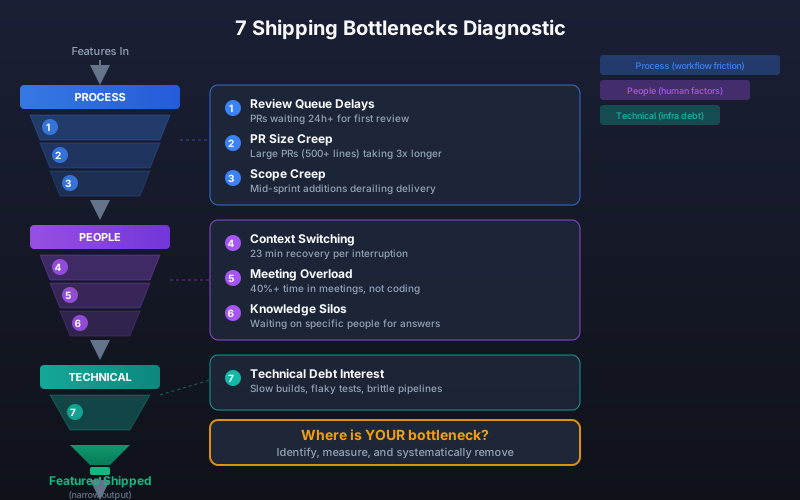
After analyzing engineering teams of all sizes, we have identified seven bottlenecks that consistently slow delivery. Most teams have 2-3 of these as dominant problems. Fixing the right ones can cut delivery time in half.
1. Review Queue Delays
The Problem: Code sits waiting for review longer than it took to write. According to the 2024 DORA research, wait time is often 60-70% of total cycle time for underperforming teams.
How to Spot It: In CodePulse, check your cycle time breakdown. If "waiting for review" exceeds "coding time," you have a review bottleneck.
| Wait Time | Impact | Typical Cause |
|---|---|---|
| < 4 hours | Healthy | Good review culture |
| 4-12 hours | Friction building | Insufficient reviewer capacity |
| 12-24 hours | Context loss begins | No explicit review ownership |
| > 24 hours | Severe bottleneck | Systemic process failure |
"A PR waiting for review is money sitting in a warehouse. Every hour it waits, context fades, conflicts accumulate, and the cost to ship it grows."
2. PR Size Creep
The Problem: Large PRs take exponentially longer to review and have higher defect rates. Research shows PRs over 400 lines get superficial reviews because reviewers experience cognitive fatigue.
How to Spot It: Calculate your average PR size. If it exceeds 400 lines, you have a batch size problem.
PR SIZE IMPACT ON CYCLE TIME
━━━━━━━━━━━━━━━━━━━━━━━━━━━━━━━━━━━━━━━━━━━━━━━━━━━━━━━━━━━━

PR Size (lines)   │ Typical Cycle Time │ Review Quality
━━━━━━━━━━━━━━━━━━┿━━━━━━━━━━━━━━━━━━━━┿━━━━━━━━━━━━━━━━
< 100             │ 4-8 hours          │ Thorough
100-400           │ 12-24 hours        │ Good
400-800           │ 2-4 days           │ Superficial
> 800             │ 5+ days            │ Rubber stamp

THE MATH:
Two 200-line PRs:   ~24 hours total (parallel review)
One 400-line PR:    ~48 hours (plus worse review quality)

Splitting work into smaller PRs is almost always faster.
3. Scope Creep Mid-Sprint
The Problem: Requirements change after development starts, forcing rework. Changing requirements mid-sprint typically doubles the time to delivery for affected features.
How to Spot It: Track your code churn rate. If more than 25% of code written is being rewritten within two weeks, scope instability is likely the cause.
4. Context Switching Tax
The Problem: Developers juggling multiple projects lose 20-30 minutes per context switch. A developer on three projects is not doing three projects; they are doing one project badly.
How to Spot It: Count open PRs per developer. More than two suggests context switching overload.
CONTEXT SWITCHING COST CALCULATOR
━━━━━━━━━━━━━━━━━━━━━━━━━━━━━━━━━━━━━━━━━━━━━━━━━━━━━━━━━━━━

Active Tasks │ Daily Switches │ Lost Time/Day │ Lost Time/Month
━━━━━━━━━━━━━┿━━━━━━━━━━━━━━━━┿━━━━━━━━━━━━━━━┿━━━━━━━━━━━━━━━━
1            │ 0              │ 0             │ 0
2            │ 1-2            │ 30-60 min     │ 10-20 hours
3            │ 3-4            │ 75-100 min    │ 25-35 hours
4+           │ 5+             │ 2+ hours      │ 40+ hours

A developer on 4 projects loses nearly a full week per month
just to context switching. This is invisible in all traditional
tracking systems.
5. Meeting Overload
The Problem: Meetings fragment focus time. A developer with four one-hour meetings spread across the day has zero four-hour focus blocks, which are essential for complex work.
How to Spot It: Audit calendars. If developers have fewer than two uninterrupted 4-hour blocks per week, meetings are killing delivery speed.
"A 30-minute meeting does not cost 30 minutes. It costs the entire afternoon if it sits in the middle and prevents deep work from starting."
6. Technical Debt Interest
The Problem: Every new feature has to navigate around existing problems. Teams spend 25-40% of their time on unplanned work related to technical debt.
How to Spot It: Track what percentage of PRs are bug fixes or maintenance versus features. If maintenance exceeds 50%, debt is strangling new work.
7. Unclear Requirements
The Problem: Developers start work without knowing when "done" looks like. This leads to over-engineering, under-engineering, and endless revision cycles.
How to Spot It: Count how many PRs require more than two rounds of review feedback. High iteration counts often indicate unclear requirements rather than code quality issues.
| Bottleneck | Primary Symptom | Quick Fix | Systemic Fix |
|---|---|---|---|
| Review Queues | High wait-for-review time | 4-hour SLA | Review rotation, more reviewers |
| PR Size | PRs over 400 lines | Soft size limit | Work breakdown training |
| Scope Creep | High churn rate | Sprint scope freeze | Better spec process |
| Context Switching | Many open PRs per dev | WIP limits | Dedicated project staffing |
| Meeting Overload | No focus time blocks | Meeting-free days | Meeting culture audit |
| Tech Debt | >50% maintenance work | Debt-focused sprints | 20% budget for debt paydown |
| Unclear Requirements | Multiple review rounds | Definition of done | Design docs before coding |
Diagnosing Your Specific Slowdown
Not every team has the same bottleneck profile. Use this diagnostic flowchart to identify your dominant friction points.
SHIPPING SPEED DIAGNOSTIC FLOWCHART
━━━━━━━━━━━━━━━━━━━━━━━━━━━━━━━━━━━━━━━━━━━━━━━━━━━━━━━━━━━━━━━━━━━━━

START: Features taking 2x+ estimated time?
│
├─ NO → Your team is performing well. Focus on consistency.
│
└─ YES → Where does work get stuck?
         │
         ├─ "Code is written but waiting for review"
         │   │
         │   ├─ Wait time > coding time? → REVIEW BOTTLENECK
         │   │   Fix: Review SLA, expand reviewer pool
         │   │
         │   └─ PRs are large (>400 lines)? → BATCH SIZE PROBLEM
         │       Fix: Smaller PRs, work breakdown training
         │
         ├─ "We keep changing what we're building"
         │   │
         │   ├─ Changes come from stakeholders? → SCOPE CREEP
         │   │   Fix: Sprint scope freeze, change request process
         │   │
         │   └─ Changes come from code review? → UNCLEAR REQUIREMENTS
         │       Fix: Design review before coding starts
         │
         ├─ "Everyone is too busy to finish anything"
         │   │
         │   ├─ Many meetings fragmenting the day? → MEETING OVERLOAD
         │   │   Fix: Meeting-free days, maker schedule
         │   │
         │   └─ Many projects per person? → CONTEXT SWITCHING
         │       Fix: WIP limits, dedicated assignment
         │
         └─ "Simple things become complicated"
             │
             └─ Fighting old code constantly? → TECH DEBT
                 Fix: Allocate 20% capacity for debt paydown

NEXT STEP: Check CodePulse dashboard for quantitative confirmation
📊 How to See This in CodePulse
Navigate to Dashboard to see your bottleneck profile:
- Cycle Time Breakdown shows where time goes (coding vs. waiting vs. review)
- Delivery Velocity tracks throughput trends over time
- PR Metrics reveal average size and merge rates
- Navigate to Forecasting to see predictive trends and anomaly detection
Quick Wins vs Systemic Fixes
Some bottlenecks can be addressed immediately. Others require organizational change. Knowing the difference prevents wasted effort.
Quick Wins (This Week)
These changes require no organizational buy-in and can be implemented by a single team:
- 4-hour review SLA: Announce it tomorrow. First review must happen within 4 working hours or escalate.
- PR size soft limit: Encourage PRs under 400 lines. Require justification for larger ones.
- WIP limit of 2: No starting new work until current PRs are merged. Finish before starting.
- Meeting-free morning: Block 9am-12pm for focused work. All meetings afternoon only.
- Definition of done template: Every ticket must specify acceptance criteria before development starts.
Systemic Fixes (This Quarter)
These require leadership support and organizational change:
- Dedicated project staffing: Stop assigning developers to multiple projects. One project, full focus.
- Tech debt budget: Allocate 20% of each sprint to debt paydown. Protect it from feature pressure.
- Design review process: Require written design docs for anything taking more than 2 days.
- Review capacity planning: Ensure reviewer-to-author ratio is at least 1:3.
- Meeting culture audit: Review all recurring meetings. If it does not have an agenda and outcome, cancel it.
🔥 Our Take
Hiring more developers does not fix slow shipping. It makes it worse.
If your team is slow because of review bottlenecks and context switching, adding more developers adds more PRs to the review queue and more coordination overhead. You are adding fuel to a blocked pipeline. Fix the flow first, then scale. Teams that cannot ship fast with 5 developers will not ship fast with 15.
Measuring Improvement Without Gaming
Any metric that becomes a target becomes gamed. The goal is faster delivery of value, not faster numbers on a dashboard. Here is how to measure improvement without creating perverse incentives.
Metrics That Matter
| Metric | What It Shows | Gaming Risk |
|---|---|---|
| Cycle Time (median) | How long work takes end-to-end | Low - hard to game without shipping |
| Wait Time Ratio | % of cycle time spent waiting | Low - exposes actual friction |
| Merge Rate | % of PRs that merge vs abandon | Medium - could rush bad PRs through |
| Deployment Frequency | How often value reaches users | Medium - could deploy small changes |
| Change Failure Rate | % of deploys causing problems | Low - balances speed metrics |
Metrics That Get Gamed
- Lines of code: Encourages verbosity. Do not measure.
- Commits per day: Encourages tiny commits. Do not measure.
- Tickets closed: Encourages ticket splitting. Use with caution.
- Individual velocity: Encourages competition over collaboration. Avoid individual metrics.
"Measure cycle time, not activity. Celebrate finished work, not started work. What you celebrate is what you will get more of."
Tracking Progress
Set a 90-day improvement goal and track weekly:
IMPROVEMENT TRACKING TEMPLATE
━━━━━━━━━━━━━━━━━━━━━━━━━━━━━━━━━━━━━━━━━━━━━━━━━━━━━━━━━━━━

Baseline (Week 0):
- Median cycle time: ____ hours
- Wait time ratio: ____%
- Average PR size: ____ lines
- Merge rate: ____%

Target (Week 12):
- Median cycle time: -30%
- Wait time ratio: < 40%
- Average PR size: < 400 lines
- Merge rate: > 90%

Weekly Check:
┌────────┬────────────┬───────────┬──────────┬───────────┐
│ Week   │ Cycle Time │ Wait Ratio│ PR Size  │ Merge Rate│
├────────┼────────────┼───────────┼──────────┼───────────┤
│ W1     │            │           │          │           │
│ W2     │            │           │          │           │
│ ...    │            │           │          │           │
│ W12    │            │           │          │           │
└────────┴────────────┴───────────┴──────────┴───────────┘

Review in retrospective: What changed? What did not? Why?
Frequently Asked Questions
Data beats anecdotes. Pull your cycle time breakdown and show where time actually goes. If 60% of cycle time is "waiting for review," that is not a developer speed problem. It is a process design problem. No amount of "working harder" will fix queue time.
Next Steps
Do not try to fix all seven bottlenecks at once. Identify your dominant one, fix it, then move to the next. For detailed guidance on specific bottlenecks, see:
- Reduce PR Cycle Time - 30-day playbook for cutting cycle time
- Cycle Time Breakdown Guide - Deep dive into where time goes
- High Activity, Low Progress - When your team is busy but not shipping
Remember: the goal is not to work faster. The goal is for value to flow faster. Find your bottlenecks, fix your flow, and shipping speed will follow.
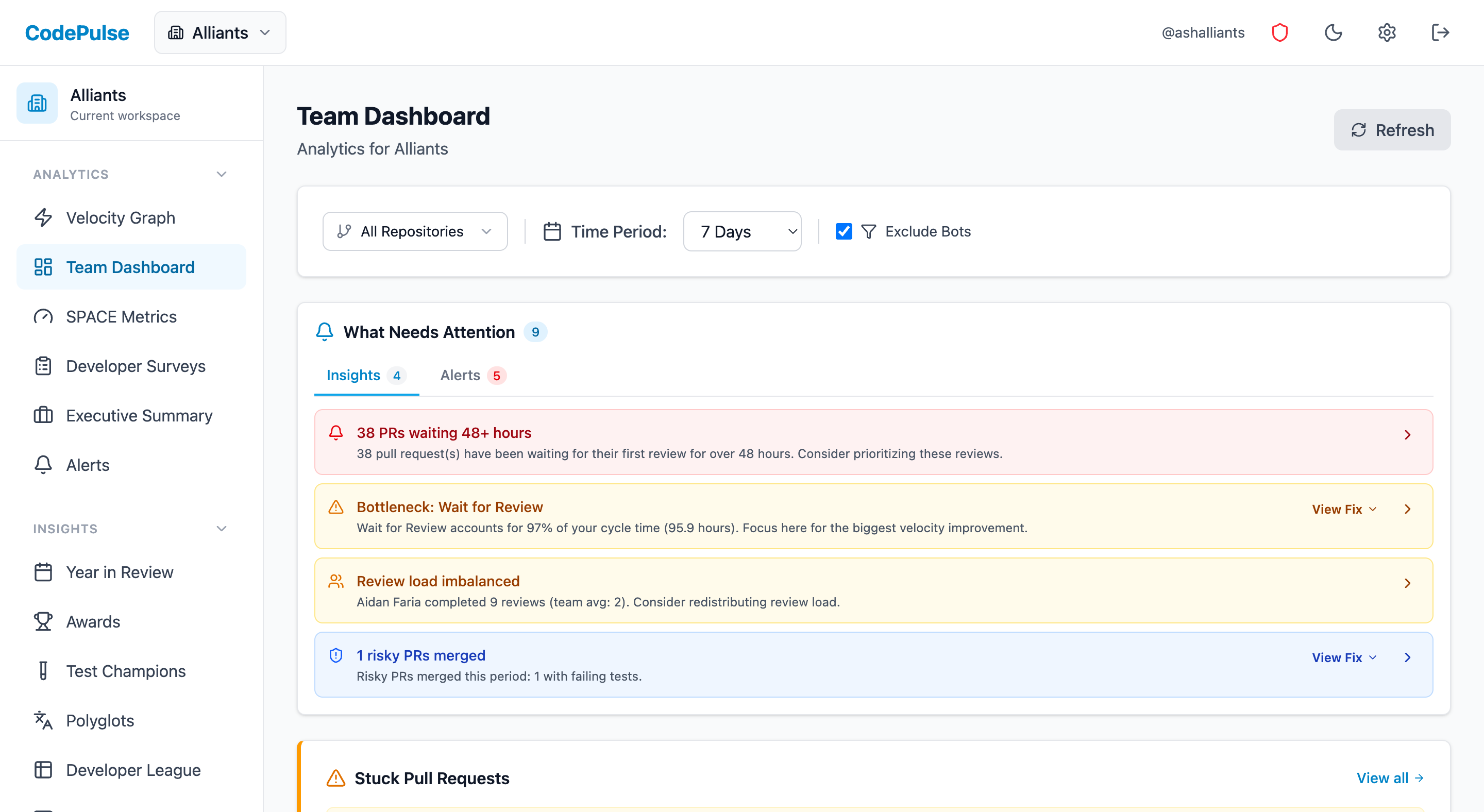
Find out which phase is holding your delivery up
CodePulse splits your cycle time into coding, waiting for review, active review, and merge, so you fix the queue that is actually costing you days. Read-only GitHub, no credit card.
Read-only GitHub · Your code stays yours · Team-level by default · No credit card
See These Features in Action
Break down cycle time into coding, waiting, review, and merge phases.
Board-ready engineering performance in a single page.
Related Guides
We Cut PR Cycle Time by 47%. Here's the Exact Playbook
A practical playbook for engineering managers to identify bottlenecks, improve review processes, and ship code faster - without sacrificing review quality.
The 4-Minute Diagnosis That Reveals Why Your PRs Are Stuck
Learn to diagnose exactly where your PRs are getting stuck by understanding the 4 components of cycle time and how to improve each one.
Lots of Commits, No Features: The Productivity Illusion
Your engineers are committing code, but features aren't launching. Use the HALT Framework to diagnose churn, abandon rate, review bottlenecks, and WIP explosion - with targeted fixes for each.
Goodhart's Law in Software: Why Your Metrics Get Gamed
When a measure becomes a target, it ceases to be a good measure. This guide explains Goodhart's Law with real engineering examples and strategies to measure without destroying what you're measuring.