

Turn this metric into a baseline for your team
Preview a system-level engineering health report, then connect GitHub when you are ready to compare this metric with your own delivery history.
Read-only GitHub · Your code stays yours · Team-level by default · No credit card
Infrastructure as Code (IaC) brings software engineering practices to infrastructure management. But how do you measure whether your IaC implementation is effective? This guide covers the metrics that matter for Terraform, Pulumi, CloudFormation, and other IaC tools.
"If your infrastructure isn't in code, it's tribal knowledge waiting to be lost."
What Is Infrastructure as Code?
Infrastructure as Code means defining infrastructure (servers, networks, databases) through declarative configuration files rather than manual processes. Benefits include:
- Version control: Track changes, review, and rollback
- Reproducibility: Same code = same environment
- Automation: Apply infrastructure changes via CI/CD
- Documentation: Code is the documentation
Core IaC Metrics
Adoption Metrics
| Metric | Definition | Target |
|---|---|---|
| IaC Coverage | % of infrastructure defined as code | >90% (ideally 100%) |
| Drift Rate | % of resources drifted from code | <5% |
| Manual Changes | Infrastructure changes made outside IaC | Zero (or trending to zero) |
Quality Metrics
| Metric | Definition | Target |
|---|---|---|
| Plan Success Rate | % of terraform plans that succeed | >95% |
| Apply Success Rate | % of applies that complete without error | >98% |
| Security Violations | Issues found by IaC security scanning | Zero critical/high |
| Module Reuse | % of infra using shared modules | >70% |
Efficiency Metrics
| Metric | Definition | Why It Matters |
|---|---|---|
| Environment Provisioning Time | Time to create new environment | Minutes, not hours/days |
| Recovery Time | Time to rebuild from code | Should match disaster recovery SLA |
| Change Lead Time | PR to infrastructure deployed | Same-day for routine changes |
/// Our Take
The most important IaC metric is drift - if code doesn't match reality, you don't have IaC.
Teams celebrate "100% IaC coverage" while their actual infrastructure drifts 30% from what's in Git. Drift detection (via Terraform Cloud, Spacelift, etc.) is more important than coverage percentage. Code that doesn't match reality is dangerous documentation.
IaC Tools Comparison
| Tool | Best For | Key Metrics Available |
|---|---|---|
| Terraform | Multi-cloud, mature ecosystem | Plan/apply success, drift (via Cloud) |
| Pulumi | Real programming languages | Update success, resource count |
| CloudFormation | AWS-native, deep integration | Stack status, drift detection |
| Ansible | Configuration management | Playbook success, changed resources |
IaC Security Scanning
Security issues in IaC become production vulnerabilities. Scan early:
| Tool | What It Catches |
|---|---|
| Checkov | Misconfigurations, compliance violations |
| tfsec | Terraform-specific security issues |
| Terrascan | Policy violations across IaC tools |
| Snyk IaC | Misconfigurations with fix suggestions |
IaC Security Metrics to Track
═══════════════════════════════════════════════════

□ Critical violations blocked in CI: ___
□ High severity issues in backlog: ___
□ Average time to remediate: ___ days
□ False positive rate: ___%
□ Scan coverage: ___% of IaC files
📊 How to Track This in CodePulse
CodePulse tracks the delivery metrics that IaC should improve:
- Deployment Frequency: Should increase with IaC automation
- Change Failure Rate: Should decrease with reproducible infra
- Lead Time: Should stabilize (no manual infra bottlenecks)
View trends in the Dashboard.
Common IaC Pitfalls
Pitfall 1: State File Mismanagement
Terraform state is critical. Local state files, no locking, or shared state without proper access control cause drift and conflicts.
Pitfall 2: No Module Standards
Without shared modules, teams copy-paste and diverge. Create an internal module registry and measure adoption.
Pitfall 3: Manual Hotfixes
When something breaks, the temptation is to fix it manually. This creates drift. Fix in code, even for emergencies.
Related Guides
- DevOps Automation Metrics Guide - Measuring automation effectiveness
- GitOps vs DevOps Guide - IaC is foundation for GitOps
- Platform Team Metrics - IaC is core platform capability
Conclusion
Infrastructure as Code metrics should focus on coverage, drift, and efficiency. The goal is reproducible, version-controlled infrastructure that can be provisioned on demand and recovered quickly.
"100% IaC coverage means nothing if drift is 30%. Measure what's actually deployed, not just what's in Git."
Track your delivery metrics with CodePulse to see how IaC investments improve overall delivery performance.
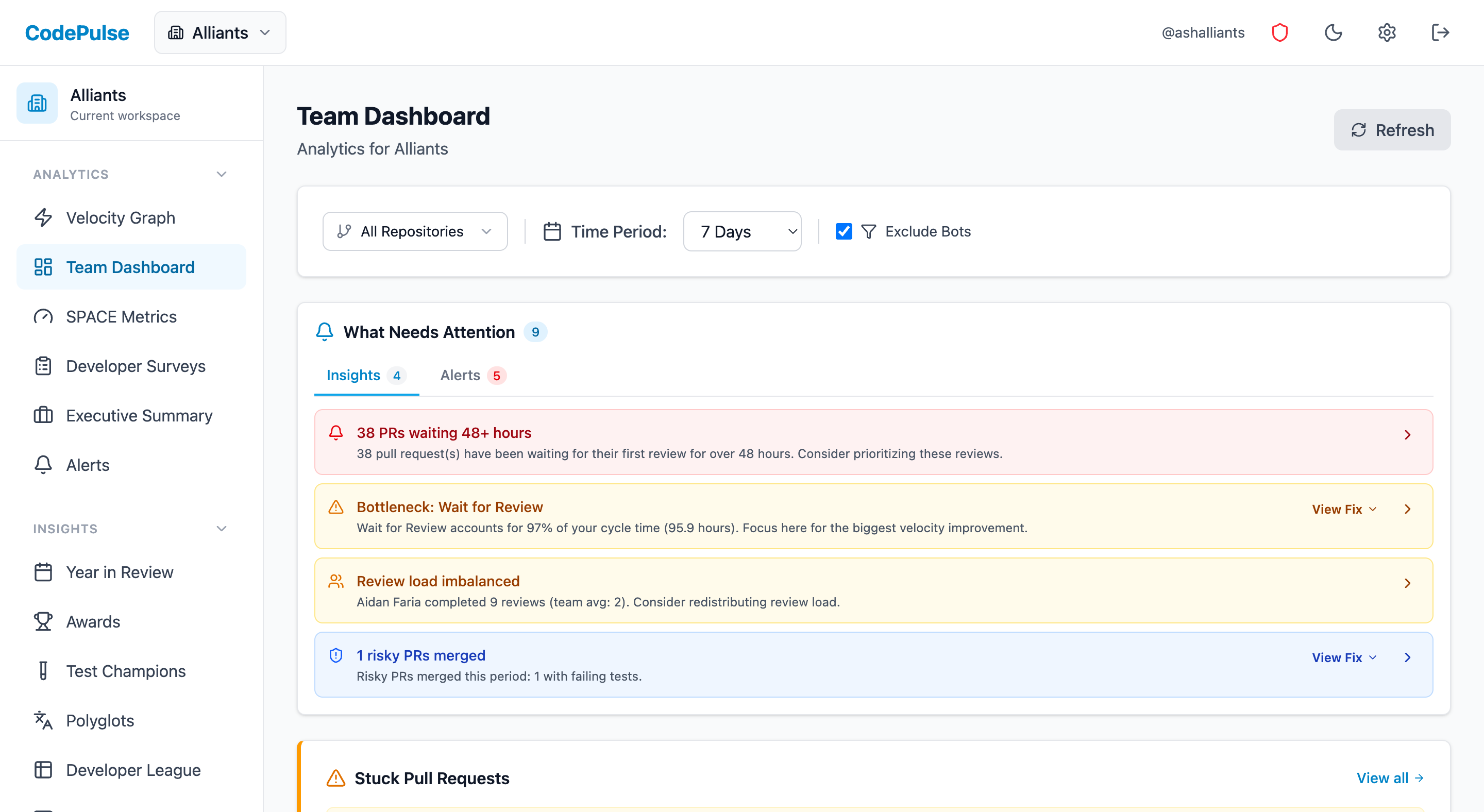
Now measure this metric on your own repositories
Connect read-only GitHub in about five minutes and get your baseline, your trend, and the constraint behind it. Your fourteen usable trial days start when the first repository finishes syncing.
Read-only GitHub · Your code stays yours · Team-level by default · No credit card
See These Features in Action
Track deployment frequency, lead time, and release patterns.
Track all four DORA metrics and benchmark against industry standards.
Related Guides
DevOps Automation: How to Measure What Actually Matters
DevOps automation promises faster delivery and fewer errors. This guide covers the metrics that prove automation ROI, what to automate first, and how to calculate the business impact.
GitOps vs DevOps: The Evolution of Deployment
GitOps extends DevOps with Git as the single source of truth for deployment. This guide explains the relationship, when to use GitOps, and how to measure GitOps effectiveness.
Platform Tools: The Build vs Buy Mistake
A practical guide to platform engineering tools, build vs buy decisions, and the metrics that prove platform impact.
Platform Engineering Metrics: KPIs That Prove Infra Impact
Standard velocity metrics make platform teams look slow. These platform-specific KPIs - adoption rate, force multiplier, infra stability - show the real impact.