

See exactly where your delivery flow is waiting
Preview the phase-by-phase report for review pickup, active review, and merge time. Connect in about five minutes; the initial analysis runs after sync.
Read-only GitHub · Your code stays yours · Team-level by default · No credit card
Release management has evolved from scheduled "big bang" deployments to continuous delivery pipelines that ship code multiple times per day. But many teams are stuck in between - deploying frequently but without the processes and metrics to do it safely. This guide covers modern release management practices with the metrics that matter.
"The goal of release management isn't to prevent bad deploys - it's to make deploying so safe that you can do it anytime."
What is Release Management?
Release management is the process of planning, scheduling, and controlling software builds through different environments to production. Modern release management focuses on:
- Speed - Getting changes to users quickly
- Safety - Minimizing risk of incidents
- Visibility - Knowing what's deployed where
- Reversibility - Rolling back when things go wrong
Release Models Compared
| Model | Frequency | Risk Profile | Best For |
|---|---|---|---|
| Big Bang | Quarterly/Yearly | High risk, big changes | Legacy systems, regulated industries |
| Release Train | Bi-weekly/Monthly | Medium risk, batched changes | Enterprise software, coordinated features |
| Continuous Delivery | Daily/Weekly | Lower risk per deploy | SaaS products, web applications |
| Continuous Deployment | Multiple/Day | Lowest risk per deploy | High-maturity teams, feature flags |
/// Our Take
The industry trend is clear: smaller, more frequent releases are safer than large, infrequent ones. The DORA research consistently shows that elite performers deploy on demand (multiple times per day) with lower failure rates than teams deploying monthly.
If your release process feels risky, the answer usually isn't to release less often - it's to invest in the automation, testing, and observability that makes frequent releases safe.
Modern Release Process
Pre-Release Checklist
RELEASE CHECKLIST
───────────────────────────────────────

BEFORE RELEASE
□ All PRs merged and tested in staging
□ No critical bugs in staging environment
□ Feature flags configured correctly
□ Database migrations tested
□ Rollback plan documented
□ On-call engineer identified
□ Release notes drafted

AUTOMATED GATES
□ Unit tests passing (100%)
□ Integration tests passing
□ Security scan passed
□ Performance regression check
□ Code coverage meets threshold

DURING RELEASE
□ Announce release start in #deploys
□ Deploy to canary/staging first
□ Monitor error rates for 15 min
□ Gradual rollout (10% → 50% → 100%)
□ Check key metrics dashboards

AFTER RELEASE
□ Verify key user flows
□ Check error monitoring (Sentry, etc.)
□ Update release notes
□ Close related tickets
□ Announce completion
Release Environments
A typical environment progression:
- Development - Developer local environments
- CI - Automated builds and tests
- Staging - Production-like environment for testing
- Canary - Small percentage of production traffic
- Production - Full customer traffic
Release Management Metrics
Core Metrics (DORA)
| Metric | What It Measures | Elite Benchmark |
|---|---|---|
| Deployment Frequency | How often you ship to production | On demand (multiple/day) |
| Lead Time for Changes | Commit to production time | Less than one hour |
| Change Failure Rate | Percentage of deploys causing incidents | 0-15% |
| MTTR | Time to recover from failures | Less than one hour |
Supporting Metrics
- Rollback rate - How often releases need reverting
- Deploy success rate - Deploys that complete without errors
- Time in staging - How long code waits before production
- Hotfix frequency - Emergency releases outside normal process
- Feature flag cleanup - Old flags removed after rollout
📊 How to See This in CodePulse
Track release health with CodePulse metrics:
- Dashboard for deployment frequency and lead time trends
- Executive Summary for DORA metrics at a glance
- Alerts to get notified when metrics drift
Enterprise Release Management
Large organizations face additional release challenges:
Coordination Across Teams
- Multiple teams shipping to the same environment
- Shared dependencies and breaking changes
- Release windows and change freezes
- Communication across time zones
Compliance Requirements
- Audit trails for all deployments
- Separation of duties (who builds vs. who deploys)
- Approval workflows for production changes
- Documentation and traceability
Release Train Model
For coordinated releases:
RELEASE TRAIN SCHEDULE
───────────────────────────────────────

Monday
├── Code freeze for Release N
├── Final testing in staging
└── Release notes finalized

Tuesday
├── Release N deployed to canary
├── Monitoring period (4 hours)
└── Full production rollout

Wednesday-Thursday
├── Bug monitoring
├── Hotfixes if needed
└── Normal development continues

Friday
├── Feature branches merged for Release N+1
├── Integration testing begins
└── Release N retrospective
Detecting Risky Releases
Some releases are inherently riskier than others. Watch for:
Size Indicators
- Large PRs (1000+ lines) - More code = more risk
- Many files changed - Broader blast radius
- Long time since last deploy - More changes bundled
Complexity Indicators
- Database migrations - Can't easily roll back
- Infrastructure changes - May affect other services
- Security-sensitive code - Auth, payments, PII handling
- High-traffic endpoints - Impact more users
Process Indicators
- Rushed reviews - Less scrutiny, more bugs
- Single reviewer - Limited perspectives
- Skipped tests - Unknown behavior
- End of day/week - Harder to fix problems
"The most dangerous releases are the ones that 'have to go out' under time pressure. That urgency is a signal to be more careful, not less."
Rollback Strategies
Instant Rollback
Deploy the previous version immediately. Works when:
- No database schema changes
- No breaking API changes
- Previous version still compatible
Feature Flag Disable
Turn off the new feature without deploying. Requires:
- Feature wrapped in flag
- Flag management system in place
- Old code path still works
Forward Fix
Fix the bug and deploy again. Appropriate when:
- Bug is small and understood
- Fix is low-risk
- Rollback would be disruptive
Database Rollback
Reverse database changes. Complicated because:
- Data may have changed
- Migrations may not be reversible
- Usually requires manual intervention
Release Management Best Practices
Technical Practices
- Deploy to staging first - Every time, no exceptions
- Use feature flags - Separate deploy from release
- Automate everything - Manual steps cause errors
- Make deploys boring - Routine reduces anxiety
- Monitor actively - Watch dashboards during rollout
Process Practices
- Document the runbook - Steps for deploy and rollback
- Communicate widely - Announce in Slack, update status pages
- Post-mortems without blame - Learn from failures
- Continuous improvement - Measure and improve process
Team Practices
- Shared ownership - Everyone can deploy
- On-call rotation - Clear responsibility during releases
- No hero culture - Process beats individuals
- Celebrate reliability - Not just speed
Related Guides
- Deployment Frequency and Lead Time - Deep dive into DORA metrics
- Detecting Risky Deployments - Using PR data to identify risk
- Change Failure Rate and MTTR - Measuring stability metrics
- DevOps Maturity Model - Assessing your release practices
Conclusion
Modern release management is about making deploys so routine and safe that they're boring. The best teams deploy frequently with low failure rates - not because they're lucky, but because they've invested in the automation, testing, and processes that make it safe.
- Ship smaller, more often - smaller changes are safer changes
- Automate the boring parts - humans make mistakes
- Monitor actively - catch problems before users do
- Make rollback easy - assume you'll need it
- Measure DORA metrics - track deployment frequency, lead time, CFR, MTTR
Use CodePulse to track your release metrics over time. Are you deploying more often? Is your lead time decreasing? Is your change failure rate stable? These trends tell you if your release management is improving.
"The best release process is one that no one thinks about. When deploys are boring, you've won."
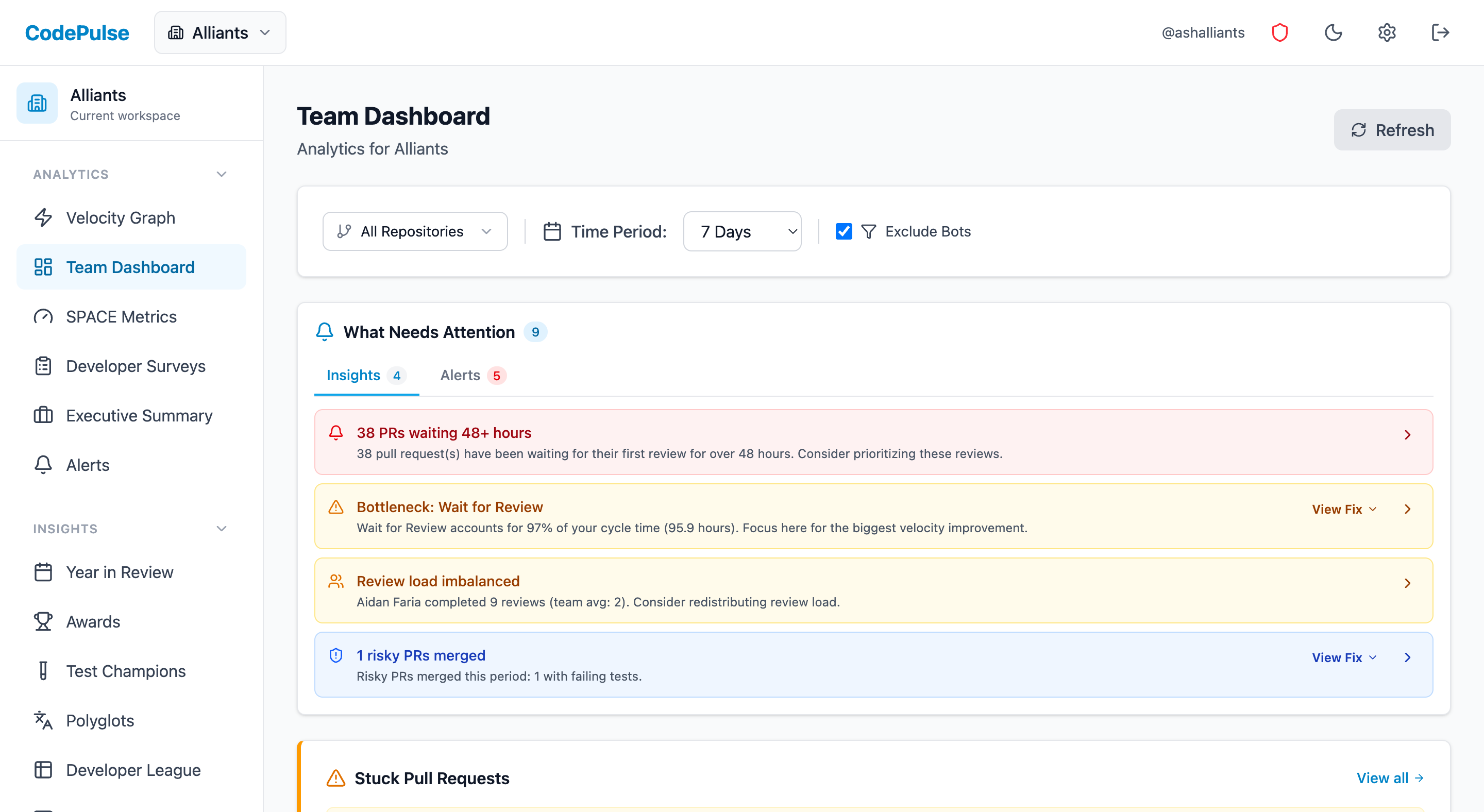
Find out which phase is holding your delivery up
CodePulse splits your cycle time into coding, waiting for review, active review, and merge, so you fix the queue that is actually costing you days. Read-only GitHub, no credit card.
Read-only GitHub · Your code stays yours · Team-level by default · No credit card
See These Features in Action
Track deployment frequency, lead time, and release patterns.
Track all four DORA metrics and benchmark against industry standards.
Related Guides
Measure Deploy Frequency Without CI/CD (The Hack)
Master DORA deployment frequency and lead time using GitHub data alone, without requiring CI/CD pipeline access.
The PR Pattern That Predicts 73% of Your Incidents
Learn how to identify high-risk pull requests before they cause production incidents.
The DORA Metric Everyone Ignores (Until Production Breaks)
Learn how to measure Change Failure Rate and Mean Time to Restore using GitHub data, even without full incident tracking integration.
DevOps Maturity Model: A Practical Assessment Framework
Assess your DevOps maturity across culture, CI/CD, testing, monitoring, and infrastructure. Includes self-assessment questionnaire and improvement roadmap by level.