
See exactly where your delivery flow is waiting
Preview the phase-by-phase report for review pickup, active review, and merge time. Connect in about five minutes; the initial analysis runs after sync.
Read-only GitHub · Your code stays yours · Team-level by default · No credit card
A DevOps maturity model is a framework for assessing where your organization stands on the journey from manual, siloed operations to fully automated, continuous delivery. This guide presents a practical maturity model, shows you how to assess your current level, and provides a roadmap for improvement - without the consulting jargon.
"Maturity models are useful as mirrors, not as destinations. The goal isn't to reach 'Level 5' - it's to identify what's holding you back today."
What is DevOps Maturity?
DevOps maturity measures how well an organization has adopted DevOps principles: automation, collaboration, continuous delivery, fast feedback, and continuous improvement. Higher maturity generally correlates with:
- Faster deployment frequency
- Lower change failure rates
- Shorter lead times
- Faster recovery from incidents
These are exactly the DORA metrics- and for good reason. DORA research shows these practices correlate with both organizational performance and employee well-being.
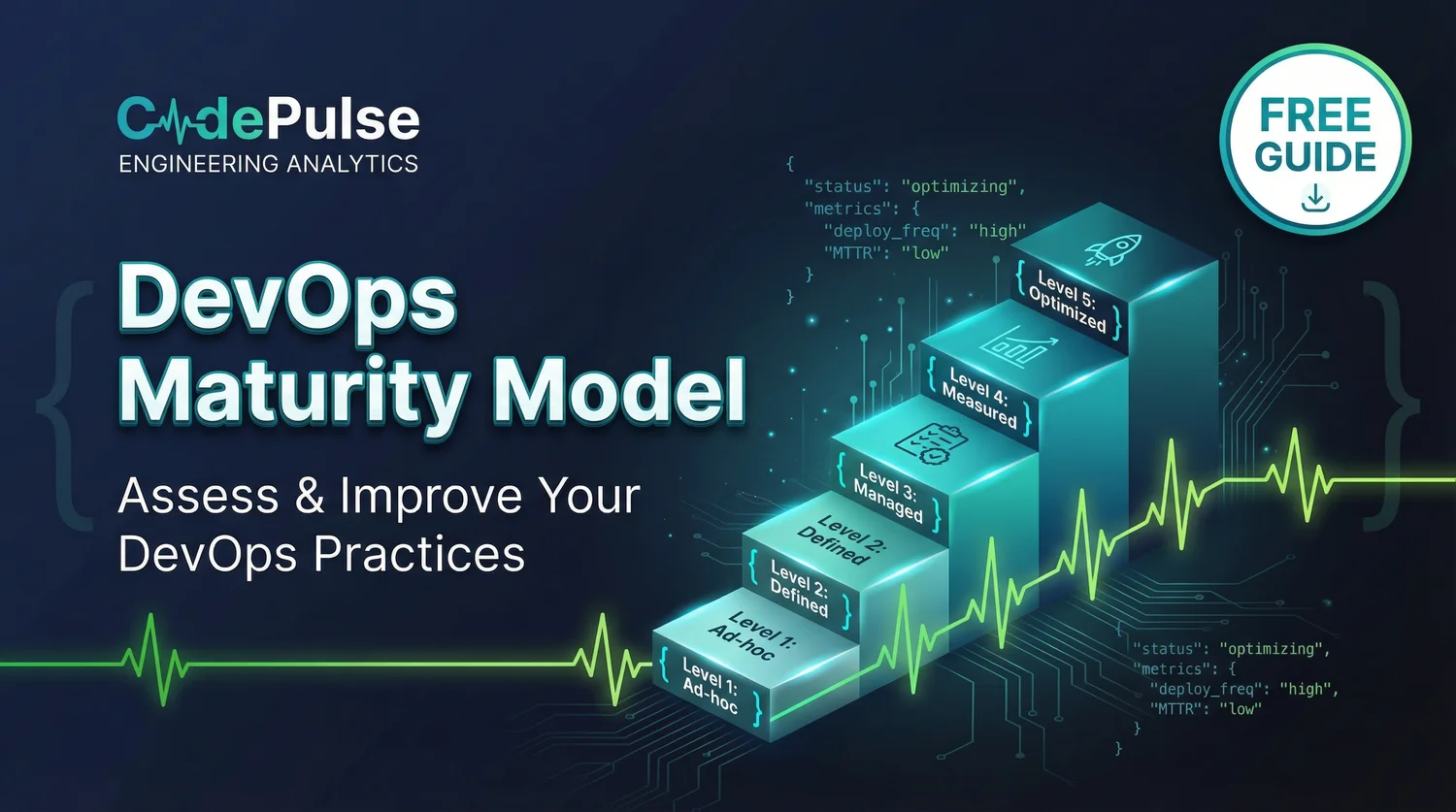
The Five Maturity Levels
Most DevOps maturity models use five levels. Here's a practical interpretation:
| Level | Name | Description | DORA Performance |
|---|---|---|---|
| 1 | Initial | Ad hoc processes, manual everything | Low performer |
| 2 | Managed | Some automation, defined processes | Low-Medium |
| 3 | Defined | Standardized across teams, CI in place | Medium |
| 4 | Measured | Metrics-driven, CD in place | High performer |
| 5 | Optimized | Continuous improvement, experimental | Elite performer |
DevOps Maturity Levels Visualization

Level 5: Optimized ████████████████████████████████████████ Elite
         Continuous improvement, experimentation, leading indicators

Level 4: Measured  ███████████████████████████████░░░░░░░░░ High
         Full CI/CD, metrics-driven decisions, proactive monitoring

Level 3: Defined   ██████████████████████████░░░░░░░░░░░░░░ Medium
         Standardized CI, automated testing, documented processes

Level 2: Managed   █████████████████░░░░░░░░░░░░░░░░░░░░░░░ Low-Med
         Some automation, basic monitoring, defined release process

Level 1: Initial   ████████░░░░░░░░░░░░░░░░░░░░░░░░░░░░░░░░ Low
         Manual processes, reactive, siloed teams
Assessment Dimensions
DevOps maturity isn't one thing - it's the combination of practices across several dimensions. Assess each separately:
1. Culture & Collaboration
| Level | Indicators |
|---|---|
| 1 | Dev and Ops are separate teams with different goals; blame culture |
| 2 | Some collaboration on releases; shared chat channels |
| 3 | Cross-functional teams; shared on-call; blameless postmortems |
| 4 | "You build it, you run it" culture; high trust environment |
| 5 | Learning organization; experimentation encouraged; failure is learning |
2. CI/CD Pipeline
| Level | Indicators |
|---|---|
| 1 | Manual builds; manual deployments; no version control for infrastructure |
| 2 | Automated builds; manual deployments; scripts checked into version control |
| 3 | CI with automated tests; push-button deployments; staging environments |
| 4 | Full CD to staging; one-click production deploys; feature flags |
| 5 | Continuous deployment to production; canary releases; automatic rollback |
3. Testing & Quality
| Level | Indicators |
|---|---|
| 1 | Manual testing only; testing happens after development |
| 2 | Some unit tests; QA team does manual regression |
| 3 | Test coverage targets; integration tests; tests run in CI |
| 4 | High coverage (>80%); fast test suite; testing in production (smoke tests) |
| 5 | Chaos engineering; contract testing; quality gates automated |
4. Monitoring & Observability
| Level | Indicators |
|---|---|
| 1 | No monitoring; learn about outages from customers |
| 2 | Basic uptime monitoring; alerts via email |
| 3 | APM in place; dashboards; on-call rotation with escalation |
| 4 | Distributed tracing; SLOs defined; proactive alerting |
| 5 | Anomaly detection; auto-remediation; business metrics correlated |
5. Infrastructure & Configuration
| Level | Indicators |
|---|---|
| 1 | Manual server setup; snowflake servers; config drift |
| 2 | Some scripted provisioning; configuration management started |
| 3 | Infrastructure as Code (IaC); environments reproducible; containers |
| 4 | Immutable infrastructure; GitOps; self-service platforms |
| 5 | Internal developer platform; infrastructure abstracted; fully self-service |
/// Our Take
Most organizations are not evenly mature across dimensions. That's normal - and useful.
A team might be Level 4 on CI/CD but Level 2 on monitoring. That tells you where to focus: better monitoring will have more impact than perfecting an already-good pipeline. Maturity models are diagnostic tools, not scorecards.
Self-Assessment Questionnaire
Answer these questions to roughly assess your current level:
DevOps Maturity Self-Assessment

For each question, score 1-5 where:
1 = Never/None, 3 = Sometimes/Partial, 5 = Always/Full

CULTURE & COLLABORATION
[ ] Dev and Ops share responsibility for production
[ ] Blameless postmortems are standard practice
[ ] Teams can deploy without waiting for another team
[ ] Failure is treated as learning opportunity

CI/CD PIPELINE
[ ] Code commits automatically trigger builds
[ ] Tests run automatically on every commit
[ ] Deployments can happen multiple times per day
[ ] Rollbacks are automated or one-click

TESTING & QUALITY
[ ] Test coverage is tracked and improving
[ ] Tests complete in under 10 minutes
[ ] Testing happens throughout development, not just at the end
[ ] Production has smoke tests or health checks

MONITORING & OBSERVABILITY
[ ] We know about outages before customers do
[ ] Dashboards show real-time system health
[ ] SLOs are defined and tracked
[ ] On-call responds within defined SLAs

INFRASTRUCTURE
[ ] Infrastructure is defined as code
[ ] Environments can be created on demand
[ ] Configuration is version-controlled
[ ] Developers can provision resources without tickets

SCORING
20-40 points: Level 1-2 (significant gaps)
41-60 points: Level 2-3 (foundation in place)
61-80 points: Level 3-4 (solid practices)
81-100 points: Level 4-5 (advanced maturity)
Improvement Roadmap by Level
"Don't try to jump from Level 1 to Level 5. Each level builds on the previous one. Skip steps and you'll create a house of cards."
Level 1 → Level 2: Foundation
- Implement version control for all code (including scripts, configs)
- Set up basic CI - automated builds at minimum
- Establish a documented release process
- Add basic monitoring (uptime, error rates)
- Create shared communication channels between dev and ops
Level 2 → Level 3: Standardization
- Add automated testing to CI pipeline
- Create staging environment that mirrors production
- Implement Infrastructure as Code (Terraform, CloudFormation, etc.)
- Establish on-call rotation with documented escalation
- Define and track basic metrics (deployment frequency, lead time)
Level 3 → Level 4: Measurement
- Implement continuous deployment to staging
- Add feature flags for safer releases
- Define SLOs and track them
- Implement distributed tracing
- Track DORA metrics and review monthly
Level 4 → Level 5: Optimization
- Enable continuous deployment to production
- Implement canary deployments or blue/green
- Add chaos engineering practices
- Build internal developer platform
- Create learning culture with regular retrospectives
📊 How to See This in CodePulse
CodePulse tracks the DORA metrics that correlate with DevOps maturity:
- Deployment Frequency: How often you ship
- Lead Time for Changes: Commit to production
- Change Failure Rate: Percentage of deployments causing issues
- Time to Recovery: How fast you fix problems
See your Executive Summary for an overall health grade, or Dashboard for detailed metrics.
Common Maturity Assessment Pitfalls
1. Aspirational Scoring
Teams often score based on what they plan to do, not what they actually do. Be honest about current state - the assessment is only useful if it's accurate.
2. Tool Confusion
Having Kubernetes doesn't mean you're Level 4. Tools enable practices, but practices are what matter. A team using Jenkins effectively may be more mature than one using cutting-edge tools poorly.
3. Ignoring Culture
Technical maturity without cultural maturity doesn't work. You can have perfect CI/CD and still fail if teams don't trust each other or learn from failures.
4. One-Time Assessment
Maturity isn't static. Assess quarterly, not annually. Things regress - new team members, tech debt accumulation, or attention shifting to other priorities.
Related Guides
- DORA Metrics Guide - The metrics that correlate with high-performing teams
- DORA Four Keys Implementation - How to measure the four key metrics
- Deployment Frequency & Lead Time - Deep dive into delivery metrics
- Platform Team Metrics - Metrics for internal developer platforms
Conclusion
A DevOps maturity model is a diagnostic tool, not a destination. Use it to:
- Understand where you are - honestly, not aspirationally
- Identify the biggest gaps - where maturity is lowest
- Prioritize improvements - focus on one level at a time
- Track progress - reassess quarterly
Remember: the goal isn't "Level 5" on some chart. The goal is shipping valuable software to customers quickly and reliably. Maturity models help you identify what's in the way.
"High-performing teams don't follow a maturity model. They solve problems, measure results, and continuously improve. The model just helps you see where to start."
Start with an honest self-assessment. Pick the dimension with the biggest gap. Focus on moving up one level in that dimension. Measure before and after with CodePulse to validate that your improvements are actually improving delivery.
Find out which phase is holding your delivery up
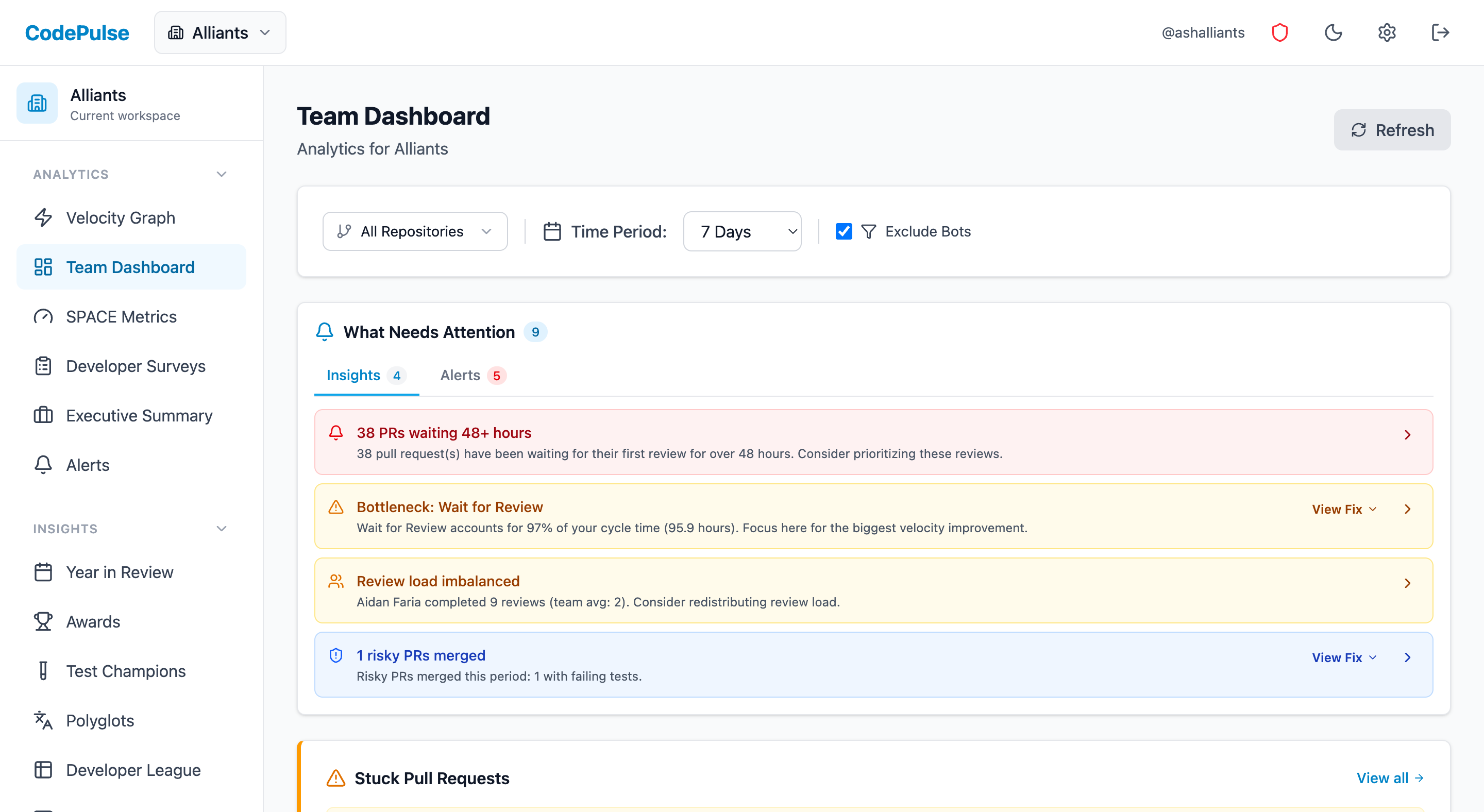
CodePulse splits your cycle time into coding, waiting for review, active review, and merge, so you fix the queue that is actually costing you days. Read-only GitHub, no credit card.
Read-only GitHub · Your code stays yours · Team-level by default · No credit card
See These Features in Action
Track all four DORA metrics and benchmark against industry standards.
Track deployment frequency, lead time, and release patterns.
Related Guides
DORA Metrics Explained: The 4 Keys Without the Hype
A complete breakdown of the four DORA metrics - deployment frequency, lead time, change failure rate, and MTTR - with honest benchmarks and gaming traps to avoid.
No CI/CD Access? Here's How Google Measures DORA Anyway
Measure DORA Four Keys (deployment frequency, lead time, change failure rate, time to restore) using only GitHub data - no CI/CD integration required.
Measure Deploy Frequency Without CI/CD (The Hack)
Master DORA deployment frequency and lead time using GitHub data alone, without requiring CI/CD pipeline access.
Platform Engineering Metrics: KPIs That Prove Infra Impact
Standard velocity metrics make platform teams look slow. These platform-specific KPIs - adoption rate, force multiplier, infra stability - show the real impact.