

Find quality and ownership risk before it becomes an incident
Preview how CodePulse combines review depth, risky changes, hotspots, and knowledge concentration without turning activity into individual scores.
Read-only GitHub · Your code stays yours · Team-level by default · No credit card
Continuous testing isn't just "running tests in CI." It's a strategy for getting fast, reliable feedback at every stage of the pipeline. This guide covers the metrics that matter for testing in DevOps, how to build a testing pyramid that doesn't slow you down, and when to invest in different types of tests.
"Fast tests that run on every commit catch more bugs than thorough tests that nobody runs."
What Is Continuous Testing?
Continuous testing means automated tests run as part of your CI/CD pipeline - not after development is "done," but throughout. The goal is fast feedback: know within minutes whether a change breaks something.
The key principles:
- Automated: Tests run without human intervention
- Continuous: Tests run on every commit, not just before release
- Fast: Feedback in minutes, not hours
- Reliable: Tests fail for real bugs, not flakiness
Core Testing Metrics for DevOps
Speed Metrics
| Metric | Definition | Target |
|---|---|---|
| Test Suite Duration | Total time to run all tests | <10 min for CI (ideal: <5 min) |
| Feedback Time | Commit to test results | <15 minutes |
| Test Parallelization | Tests running concurrently | Maximize based on infra |
Quality Metrics
| Metric | Definition | Target |
|---|---|---|
| Test Coverage | % of code exercised by tests | >80% for critical paths |
| Flaky Test Rate | Tests that fail intermittently | <1% of test suite |
| Test Failure Rate | % of builds failing tests | <10% (indicates code quality issues) |
| Escaped Defects | Bugs found in production | Trending down |
Efficiency Metrics
| Metric | Definition | Why It Matters |
|---|---|---|
| Test ROI | Bugs caught / time invested | Not all tests are equal value |
| False Positive Rate | % of failures that aren't real bugs | High FP = ignored tests |
| Test Maintenance Cost | Time spent fixing/updating tests | Should be <20% of test time |
The Testing Pyramid
Not all tests are created equal. The testing pyramid suggests an optimal mix:
The Testing Pyramid
═══════════════════════════════════════════════════

                    ┌──────┐
                    │ E2E  │  Few (5-10%)
                   ┌┴──────┴┐
                   │ Integration │  Some (20-30%)
                  ┌┴────────────┴┐
                  │   Unit Tests    │  Many (60-70%)
                  └─────────────────┘

          Fast ◀───────────────────────▶ Slow
          Cheap ◀──────────────────────▶ Expensive
          Isolated ◀───────────────────▶ Realistic

TEST TYPE CHARACTERISTICS
─────────────────────────

Unit Tests (Base)
• Speed: Milliseconds
• Coverage: Individual functions
• When: Every commit
• ROI: Highest for logic bugs

Integration Tests (Middle)
• Speed: Seconds
• Coverage: Component interactions
• When: Every commit
• ROI: Catches wiring bugs

E2E Tests (Top)
• Speed: Minutes
• Coverage: Full user flows
• When: Before deploy
• ROI: Catches integration failures
/// Our Take
The pyramid is a guide, not a rule. Some codebases need more integration tests.
If your app is mostly glue code (APIs, integrations, UI), unit tests provide limited value - integration tests catch more real bugs. The pyramid assumes logic-heavy code. Optimize for bug-catching ROI, not pyramid compliance.
The Flaky Test Problem
Flaky tests - tests that pass and fail without code changes - destroy trust in CI. When developers see random failures, they stop paying attention to test results.
Common Causes of Flakiness
- Timing issues: Race conditions, hardcoded sleeps, network latency
- Shared state: Tests depending on order or global state
- External dependencies: APIs, databases, time-based logic
- Resource constraints: Memory pressure, CPU contention
Flaky Test Metrics
Flaky Test Tracking
═══════════════════════════════════════════════════

Flakiness Score = (Inconsistent Runs / Total Runs) × 100

Example:
• Test "user_login" ran 100 times this week
• Failed 15 times (with identical code)
• Flakiness Score: 15%

THRESHOLDS
──────────
<1%   = Healthy (acceptable noise)
1-5%  = Warning (investigate)
>5%   = Critical (quarantine or fix immediately)

ACTION MATRIX
─────────────
Flakiness 1-5%   → Add to watchlist, fix when capacity
Flakiness 5-10%  → Prioritize fix this sprint
Flakiness >10%   → Quarantine (skip in CI, track separately)
"A quarantined flaky test is better than a flaky test in the main suite. Fix it or delete it - but don't let it erode trust in CI."
Test Automation Strategy
What to Automate (In Priority Order)
- Smoke tests: Critical path verification (login, core flows)
- Regression tests: Previously-found bugs should never recur
- High-risk areas: Payment, security, data integrity
- Frequently-changed code: Areas with high churn need coverage
What NOT to Automate
- Exploratory testing: Humans find edge cases better
- Visual/UX testing: Automation can't judge "looks right"
- One-time validations: Not worth maintenance cost
- Unstable features: Wait until API stabilizes
CI/CD Integration Patterns
Test Stages in CI Pipeline
═══════════════════════════════════════════════════

┌─────────────────────────────────────────────────┐
│ COMMIT                                          │
└─────────────┬───────────────────────────────────┘
              │
              ▼
┌─────────────────────────────────────────────────┐
│ STAGE 1: Fast Tests (Gate)         ~2 min      │
│ • Linting, type checking                        │
│ • Unit tests (parallel)                         │
│ • Build verification                            │
└─────────────┬───────────────────────────────────┘
              │ PASS → Continue
              ▼
┌─────────────────────────────────────────────────┐
│ STAGE 2: Integration Tests         ~5-10 min   │
│ • API contract tests                            │
│ • Database integration tests                    │
│ • Service integration tests                     │
└─────────────┬───────────────────────────────────┘
              │ PASS → Continue
              ▼
┌─────────────────────────────────────────────────┐
│ STAGE 3: E2E Tests (Pre-Deploy)    ~10-20 min  │
│ • Critical user journeys                        │
│ • Cross-browser (if needed)                     │
│ • Performance baselines                         │
└─────────────┬───────────────────────────────────┘
              │ PASS → Deploy
              ▼
┌─────────────────────────────────────────────────┐
│ DEPLOY + POST-DEPLOY VERIFICATION               │
│ • Smoke tests against production                │
│ • Synthetic monitoring                          │
└─────────────────────────────────────────────────┘
📊 How to Track This in CodePulse
CodePulse tracks delivery metrics that correlate with testing effectiveness:
- Change Failure Rate: Low failure rate = good test coverage
- Cycle Time Breakdown: See if testing is creating bottlenecks
- Lead Time Trends: Monitor if tests slow delivery over time
Use Dashboard to correlate test investments with delivery metrics.
Measuring Test Effectiveness
Coverage numbers don't tell the whole story. Here's how to measure whether tests actually catch bugs:
Bug Escape Rate
Bug Escape Rate Calculation
═══════════════════════════════════════════════════

Bug Escape Rate = Production Bugs / (Test Bugs + Production Bugs)

Example:
• Bugs caught by tests: 45
• Bugs found in production: 5
• Escape Rate: 5 / (45 + 5) = 10%

BENCHMARKS
──────────
<5%   = Excellent (tests catching almost everything)
5-15% = Good (some gaps to address)
>15%  = Concerning (significant coverage gaps)
Test Effectiveness Score
Track which tests actually catch bugs vs. which just pass. Tests that never fail might be:
- Testing trivial code
- Testing stable/unchanging code (fine, but low ROI)
- Not actually testing what they claim (bad)
Common Continuous Testing Pitfalls
Pitfall 1: Coverage Worship
High coverage doesn't mean high quality. 100% coverage on getters/setters is worthless. Focus coverage on complex logic and high-risk areas.
Pitfall 2: Slow Test Suites
If tests take 30+ minutes, developers won't wait for them. They'll push anyway, skip tests locally, and CI becomes a bottleneck. Keep fast tests fast.
Pitfall 3: Ignoring Test Maintenance
Tests are code. They need refactoring, updating, and sometimes deleting. Budget 15-20% of testing time for maintenance.
Pitfall 4: Testing Implementation Instead of Behavior
Tests that break when you refactor (without changing behavior) slow you down. Test what the code does, not how it does it.
Related Guides
- Test Failure Rate Guide - Deep dive into test failure metrics
- DORA Metrics Guide - Change failure rate and delivery metrics
- DevSecOps Metrics Guide - Security testing in the pipeline
- Reduce PR Cycle Time - Keeping tests from slowing delivery
Conclusion
Continuous testing is about fast, reliable feedback - not maximum coverage or test count. Focus on:
- Speed: Keep the test suite under 10 minutes
- Reliability: Fix or quarantine flaky tests immediately
- ROI: Invest in tests that catch real bugs
- Maintenance: Budget time for test upkeep
"The best test suite is one that developers trust. Trust comes from speed, reliability, and catching real bugs - not from coverage percentages."
Track your delivery metrics with CodePulse to see how your testing investments correlate with change failure rate and overall delivery performance.
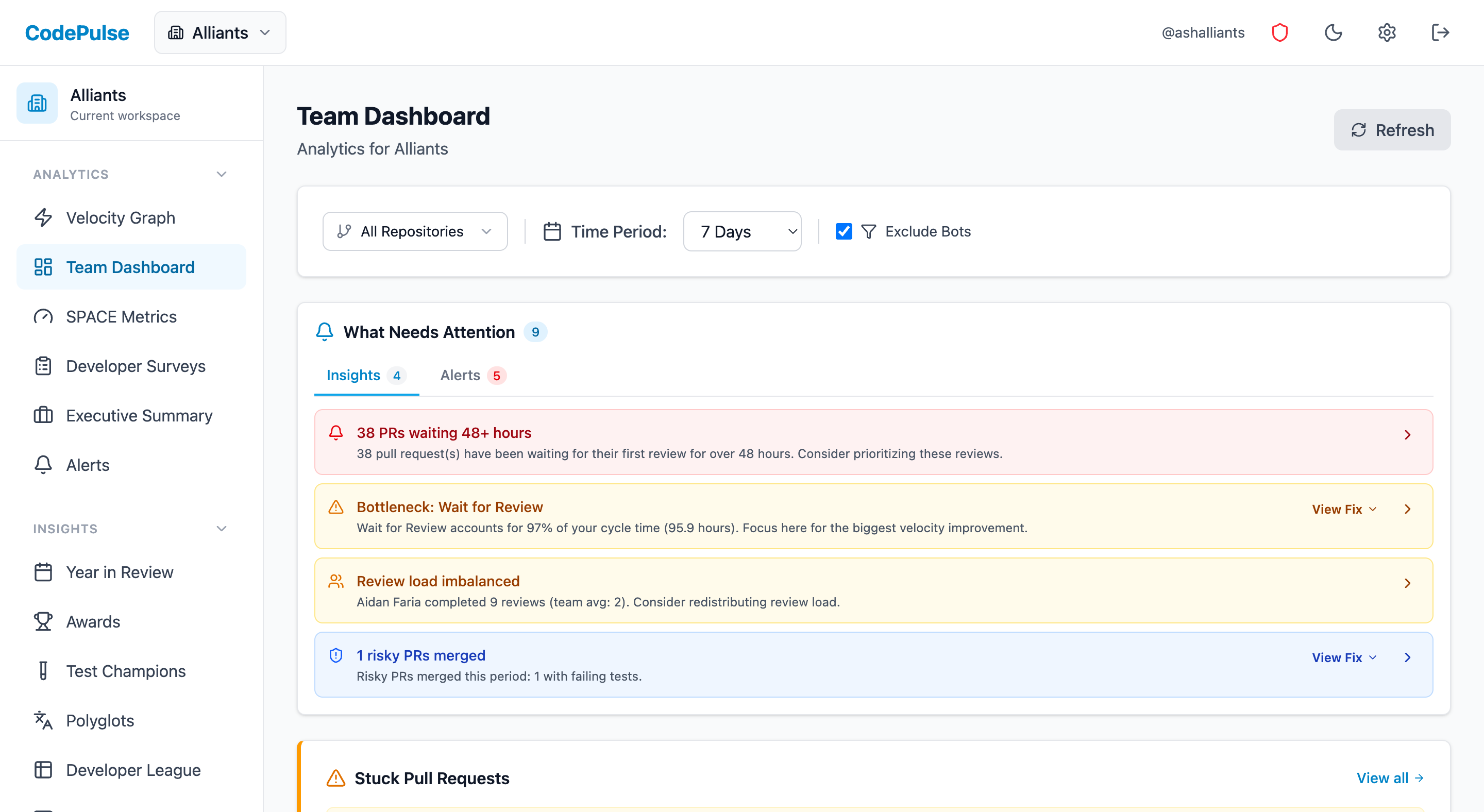
See which files and owners carry your real risk
Connect GitHub and get your churn hotspots, single-owner modules, and review-depth signals ranked by exposure. No repository cloning, no file contents read.
Read-only GitHub · Your code stays yours · Team-level by default · No credit card
See These Features in Action
Flag large PRs, single-owner changes, and untested modifications.
Track deployment frequency, lead time, and release patterns.
Related Guides
Your CI Is Crying for Help. Here's What It's Telling You
Understand what test failure rate measures, identify patterns causing CI failures, and implement strategies to improve your pipeline reliability.
DORA Metrics Explained: The 4 Keys Without the Hype
A complete breakdown of the four DORA metrics - deployment frequency, lead time, change failure rate, and MTTR - with honest benchmarks and gaming traps to avoid.
DevSecOps Metrics: Security Without Killing Velocity
Learn how to measure the "Sec" in DevSecOps using GitHub data. Track check failure rates, time-to-fix vulnerabilities, and security impact on delivery speed.
We Cut PR Cycle Time by 47%. Here's the Exact Playbook
A practical playbook for engineering managers to identify bottlenecks, improve review processes, and ship code faster - without sacrificing review quality.